

Table of Contents
- The 15 Essential Steps of Storytelling
- Novel Scene Development Guide: Crafting Situation and Action
- Storytelling Structure Steps: From Plot Points to Pacing
- Writing a Compelling Antagonist and Supporting Characters
- Dialogue, Word Choice, and Voice: Steps 13-15
- The Hero's Journey: Closure, Lessons Learned, and Tied-Up Ends
- Turning Your Draft into a Finished Manuscript
- Conclusion
Last Updated: August 25, 2026
The 15 Essential Steps of Storytelling
Writing a compelling novel requires deliberate architecture, a framework that guides your story from spark to satisfaction. The 15 essential steps form the backbone of every novel that grips readers and stays with them long after the final page.

At writeinspire, we've spent over 30 years coaching writers through this exact process. Writers who follow a structured approach finish their manuscripts (peer-reviewed research). Those who skip steps tend to abandon their work halfway through.
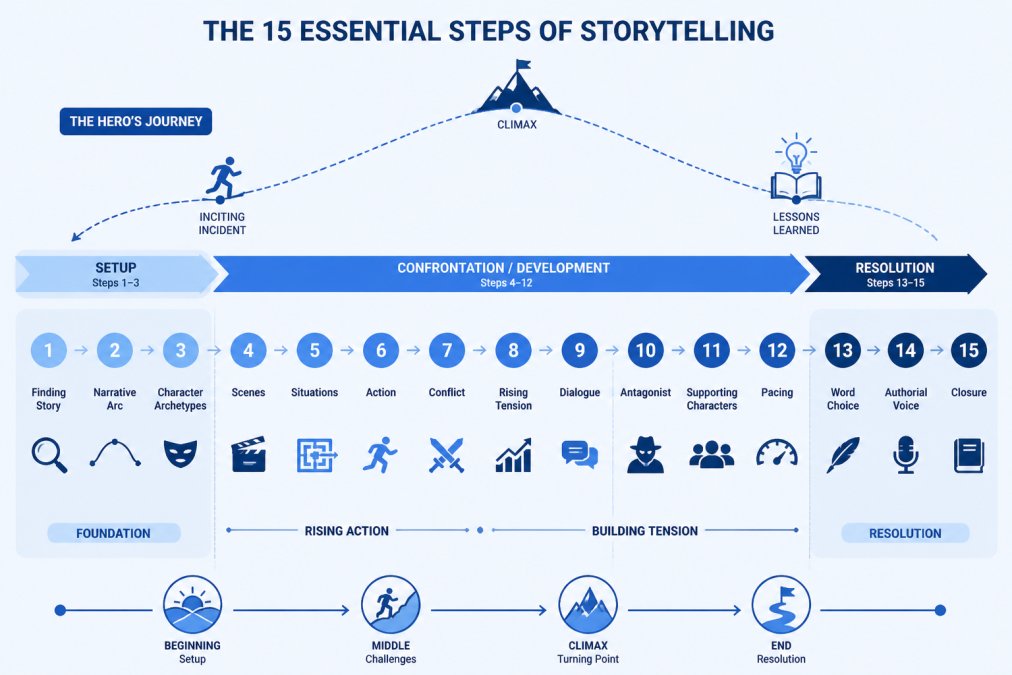
The 15 steps weave together three core layers: story discovery and development, character architecture, and the technical craft of scenes, action, dialogue, and language. Each step builds on the last.
Steps 1-3: Finding Your Story and Developing the Narrative Arc
Every novel begins with a question: what story demands to be told? This is not the same as having a premise or plot twist. A story idea that matters is one that troubles you, that you've lived with, that you feel compelled to explore.
Step 1 is finding your story. Identify the core conflict, the tension between what your protagonist wants and what stands in their way. Know why this story matters to you. Many writers skip this step and begin writing before they've truly claimed their story, resulting in manuscripts that meander and lack a spine.
Step 2 is developing the narrative arc, the backbone of your novel (mla.org). It begins with the inciting incident, the moment that disrupts your protagonist's ordinary world. It builds through rising action, reaches a climax where your protagonist must act, and resolves into a denouement where consequences settle. The best narrative arcs show transformation. Your protagonist enters one way and exits another, having learned something.
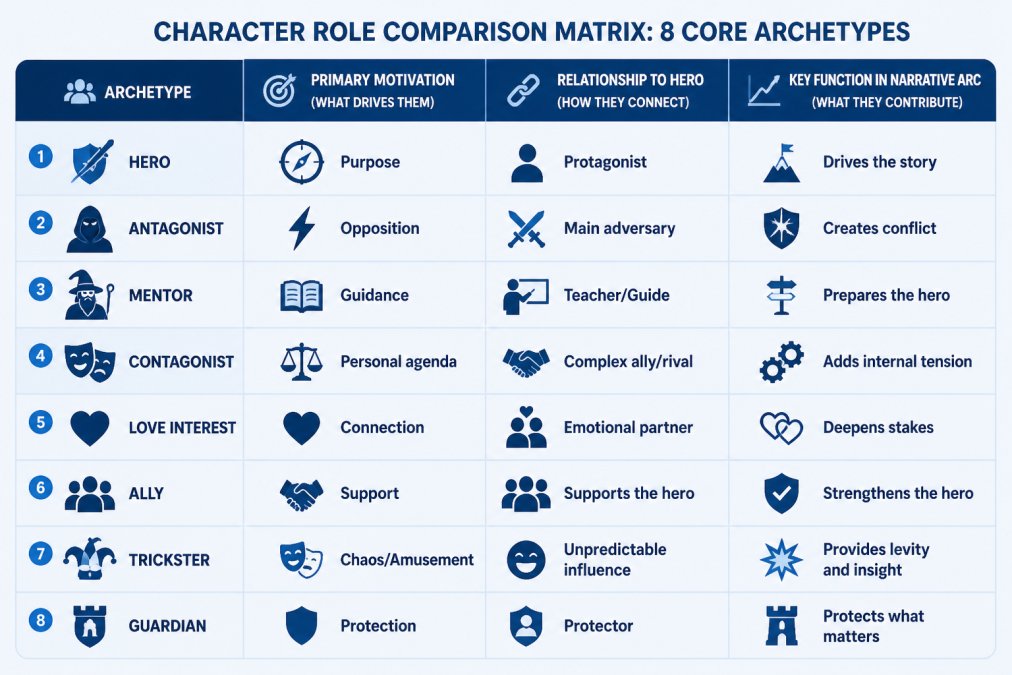
Step 3 is establishing character archetypes. Every compelling novel draws on recognisable patterns woven into human storytelling across cultures and centuries (peer-reviewed research). The Hero is your protagonist. The Antagonist opposes them. The Mentor guides them. The Love Interest tests their priorities. The Contagonist tempts them away from their goal. The Ally supports them. The Trickster complicates their path. The Guardian stands at the threshold. These eight core archetypes describe function, not personality. A single character can embody more than one archetype.
The Creative Story Mastery modules at writeinspire guide you through finding your story and developing narrative arc with precision. Module 1 focuses on discovering and identifying compelling stories and Module 2 guides you through shaping initial ideas into structured story concepts so your foundation is solid before you write a single scene.
Novel Scene Development Guide: Crafting Situation and Action
A novel is made of scenes. A scene is a unit of narrative where action unfolds in real time, where characters move and speak and reveal themselves through what they do.
Step 4 is mastering scene structure. Every scene needs a situation (specific time, place, circumstance), action (movement, dialogue, physical behaviour), and purpose (advancing plot or revealing character). A common mistake is writing purposeless scenes. If nothing changes and the reader learns nothing new, cut it or give it stakes.
Step 5 is writing action that reveals character. Action is any physical movement or behaviour, how your character sits, what they touch, how they move through space. Instead of writing "She was angry," write the action: "She gripped the edge of the table until her knuckles whitened, her jaw clenched so hard she thought her teeth might crack."
Step 6 is structuring scenes for maximum impact. A scene typically has three parts: exposition (establish where we are and what's at stake), confrontation (tension rises, characters respond), and resolution (something has changed). This structure keeps scenes moving and prevents them from becoming static conversations.
Storytelling Structure Steps: From Plot Points to Pacing
Steps 7 through 9 focus on the larger architecture of your novel, how scenes connect, how tension builds, and how you manage the reader's experience.
Step 7 is identifying your key plot points. A plot point is a scene or event that fundamentally shifts your story's direction. Your inciting incident and climax are plot points. Between them, you typically have 3-5 major plot points that escalate tension and complicate your protagonist's situation.
Step 8 is pacing your novel. Pacing is the rhythm at which you reveal information and escalate tension. Short, punchy scenes create urgency. Longer, reflective scenes allow readers to breathe. By varying your pace, you keep readers engaged.
Step 9 is managing subplots and secondary storylines. Most novels have more than one thread of action. Secondary threads add texture and depth, but they must serve the main story. A subplot with no connection to your protagonist's central journey feels like padding.
Writing a Compelling Antagonist and Supporting Characters
Your protagonist is only as strong as the opposition they face.
The Antagonist: Opposition with Purpose
Step 10 is crafting an antagonist with genuine motivation. Your antagonist doesn't need to be evil, they need to be opposed to your protagonist's goal and believe their position is justified. The best antagonists are heroes of their own stories. They have reasons for what they do, stakes, something to lose if the protagonist wins.
An antagonist who simply wants to destroy the protagonist because they're evil is weak. An antagonist who wants the same thing the protagonist wants, but for different reasons with different methods and genuine conviction, creates real conflict.
The Contagonist, Love Interest, and Mentor
Step 11 is developing your supporting cast with intention. The Contagonist tempts your protagonist away from their goal, offering an easier path or compromise. They test your protagonist's commitment. The Love Interest is most compelling when they're more than a romantic reward, they have their own goals, conflicts, and reasons for being in the story. They complicate the protagonist's journey and force choices.
The Mentor is the guide who's walked a similar path before. The best Mentors aren't infallible, they have flaws, make mistakes, and sometimes give advice the protagonist must learn to question. A Mentor who struggles and grows alongside the protagonist feels real.
Step 12 is ensuring your supporting characters serve the story. Every character should either advance the plot, reveal something about your protagonist, or both. Give your supporting characters agency and conflict.
Dialogue, Word Choice, and Voice: Steps 13-15
The final three steps focus on the technical craft of language.
Step 13 is writing dialogue that sounds real without actually sounding like real speech. Good dialogue reveals character, advances plot, and shows conflict. A character's way of speaking should be distinct enough that readers know who's speaking even without attribution tags.
Step 14 is choosing words with precision. Every word carries weight. The difference between "walked," "trudged," and "sauntered" is not subtle. The best writers are obsessive about word choice and revise at the sentence level.
Step 15 is developing your voice. Voice is the sum of all your choices, sentence rhythm, word choices, perspective, sensibility. Voice emerges through writing, revision, and thousands of small decisions about how to say something.
The Hero's Journey: Closure, Lessons Learned, and Tied-Up Ends
The 15 steps culminate in a complete hero's journey where your protagonist emerges transformed. Your protagonist must come out the other end triumphant in their lessons learned. This doesn't mean they win every battle or get everything they wanted, it means they've learned something about themselves, about the world, about what matters.
Closure means tying up your story ends so the reader understands the consequences of your protagonist's choices. Even if you end with a question, the author must ask it deliberately. The reader should feel the question is intentional, not that the writer ran out of steam.
Turning Your Draft into a Finished Manuscript
Writing the first draft is one challenge. Turning that draft into a finished manuscript is another. Revision is not about fixing typos, it's about stepping back and asking hard questions. Does the narrative arc hold? Are the character arcs complete? Do the scenes serve the story? Is the pacing right? Does the ending satisfy?

Let your first draft rest for a few weeks. Distance gives you perspective. When you return to it, you'll see weaknesses you couldn't see while deep in the writing.
The writeinspire Writing Coaching program guides you through this entire journey, from finding your story through manuscript completion. You work with experienced coaches who've helped writers finish their manuscripts and refine them into publishable work.
Conclusion
How to write a compelling novel has no single answer, but it has a reliable process. The 15 steps, from finding your story through developing character archetypes, crafting scenes and action, managing your narrative arc, creating opposition and supporting characters, perfecting dialogue and voice, and delivering closure, form a proven framework. Writers who follow this structure finish their manuscripts and create work that grips readers and satisfies them.

The writeinspire team brings 30 years of experience to this exact challenge. Our Creative Story Mastery modules break down each of these 15 steps into actionable guidance. Module 1 helps you discover your story, Module 2 guides narrative arc and story development, and Module 3 teaches character development with depth. Whether you're starting from scratch or revising a half-finished manuscript, our coaching approach focuses on rigorous craft rather than shortcuts. Get started with writeinspire and transform your story idea into a finished manuscript you're proud of.
Frequently Asked Questions
What are the 15 essential steps of storytelling?
The 15 steps form the backbone of how to write a compelling novel. They begin with finding your story idea and developing a strong narrative arc. Next comes character archetype development, building your protagonist, antagonist, mentor, love interest, and contagonist. Then you craft scenes and situations, write action sequences that reveal character, develop dialogue that sounds natural, and refine your word choice and voice. The final steps involve ensuring your hero's journey reaches a satisfying resolution with closure, lessons learned, and all loose ends tied up. Each step builds on the previous one, creating a complete manuscript.
How do I incorporate the 8 core archetypes into my novel?
Your novel can benefit from incorporating core character archetypes. The Hero drives the story forward through their choices and growth. The Antagonist provides opposition with genuine stakes. The Mentor offers wisdom and guidance. The Love Interest creates emotional investment and personal stakes. The Contagonist blocks the hero's progress, forcing them to grow. Other archetypes like the Ally (supporter), the Trickster (comic relief or moral challenge), and the Guardian (threshold guardian) can also enrich your narrative. Each archetype serves a specific function in your narrative arc. They don't need to be eight separate people, one character can embody multiple roles, but ensuring each function is represented in your story can add depth.
What makes a love interest genuinely compelling to readers?
A compelling love interest isn't just a reward or decoration in your story. They must have their own goals, conflicts, and reasons for caring about the hero that have nothing to do with the hero's needs. Give them flaws, contradictions, and moments where they challenge the protagonist. Their relationship should complicate the hero's journey, not simplify it. Readers connect when the love interest feels like a real person with agency, someone the hero has to earn, understand, and sometimes compromise with. The best love interests force the hero to grow in directions they didn't expect.
How do I ensure my antagonist is effectively resolved?
Your antagonist's threat should be neutralised by the end of your novel in a way that satisfies readers. This doesn't always mean death; they might be imprisoned, reformed, exposed, or simply defeated in their goal. The key is that their opposition to the hero is resolved, not left ambiguous. The reader should understand why the antagonist no longer poses a threat. If your antagonist has depth and motivation, their resolution should feel earned, not convenient. A compelling antagonist's downfall reveals something about your hero's growth and what they've learned.
Can I end my novel with an open question?
Yes, but only if you ask it deliberately. An open ending works when the author poses a clear question that invites reflection, rather than leaving readers feeling abandoned. Your story's main conflict must be resolved, loose ends tied up, and the hero's journey completed with closure and lessons learned. What remains open should be intentional, a philosophical question, a future possibility, or a choice the reader must contemplate. Avoid vague, unresolved endings that leave audiences languishing for satisfaction. The difference is control: you choose the ambiguity, rather than leaving it accidental.
What's the difference between outlining and pantsing when writing a novel?
Outliners plan their narrative arc, plot points, and character development before writing the first draft. This approach helps maintain pacing, ensure all story ends tie up, and prevent major revisions. Pantsers write by discovery, letting the story and characters emerge as they write. Both methods work, but most writers find a hybrid approach effective: outline your major plot points and character arcs, then allow flexibility in scenes and dialogue. For a compelling novel with satisfying closure and resolved antagonists, at least knowing your ending and your hero's lessons learned before you start helps enormously.
How much time do I need to commit to writing a novel?
Consistency matters more than duration. Even one or two hours weekly, if protected and focused, builds momentum and keeps your manuscript progressing. Many writers find that regular shorter sessions maintain better creative energy than sporadic long blocks. Set a realistic word-count goal per session, even 300 words daily adds up to 100,000 words in a year. The real investment is showing up repeatedly, not the clock hours. Most writers benefit from structured coaching or a writing program to stay accountable and move from first draft through revision toward a finished manuscript.
This article was written using GrandRanker