

Table of Contents
- Step 1: Run a Manuscript Assessment Checklist Before You Book
- Step 2: How to Format a Manuscript for Professional Review
- Step 3: Set Your Word Count Targets and Writing Milestones
- Step 4: Get Clear on Writing Coach Expectations (and Your Own)
- Step 5: Sort Out Third-Party Permissions and Author Resources
- Step 6: Prepare Yourself for Editorial Feedback
- Step 7: Choose the Right Tools and Coaching Support
- Frequently Asked Questions
Last Updated: October 1, 2026
Step 1: Run a Manuscript Assessment Checklist Before You Book
Preparing your manuscript for professional coaching starts long before you book a session, with an honest look at what you actually have. At writeinspire, we have spent more than 30 years helping writers turn rough drafts into finished work, and the pattern is always the same: writers who arrive with a clear picture of their draft get far more from coaching.

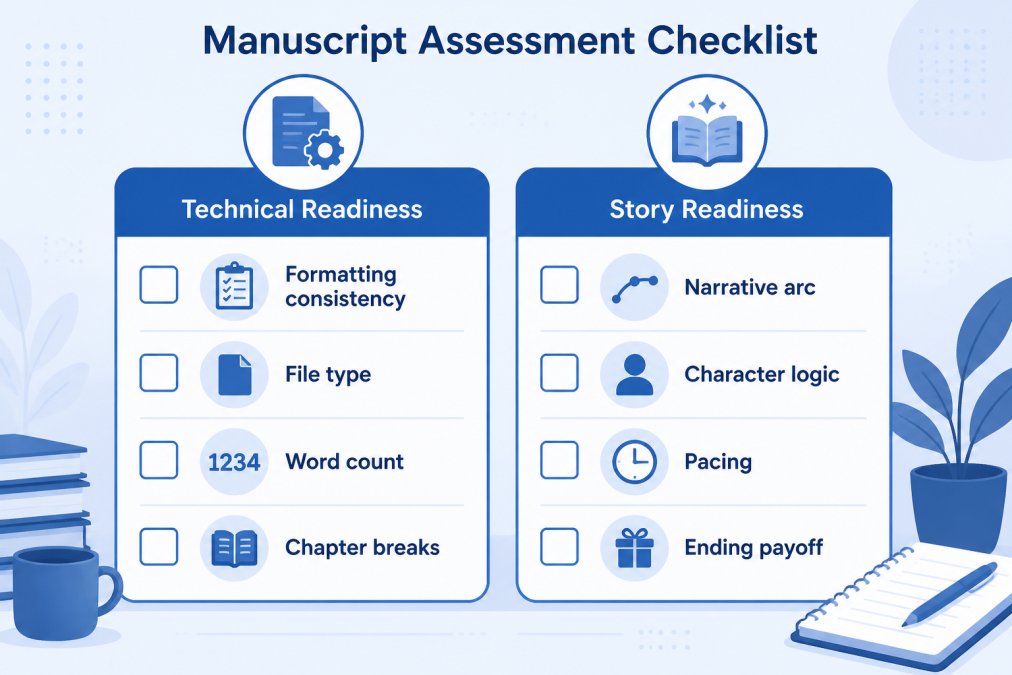
The Technical Readiness Check
Technical readiness is the boring half, and it matters more than you think. Before you book, confirm:
- The draft is in one file, not twelve
- Chapter breaks are marked and numbered
- Font and spacing are the same throughout
- You know your current word count
- You can name your target genre and audience
The Story Readiness Check
Story readiness is harder to judge alone. Ask yourself:
- Can I describe the story in two sentences?
- Does every main character want something specific?
- Does the middle build, or does it drift?
- Does the ending pay off what the opening promised?
A common mistake is assuming a coach will "find" the story for you. They can help you shape it, not invent it. Knowing where your story stands is the first real step in preparing your manuscript for professional coaching.
Step 2: How to Format a Manuscript for Professional Review
Formatting a manuscript for professional review means making it easy to read, comment on, and edit. Standard industry formatting is simple: double spacing, a readable 12-point font, one-inch margins, page numbers, your name and title in a header, and each chapter starting on a new page.

A few practical rules:
- Use one file format everyone can open
- Keep chapter headings consistent
- Never send a PDF if you want comments back
- Save a master copy before you send anything
Step 3: Set Your Word Count Targets and Writing Milestones
Word count targets and writing milestones turn a vague dream into a plan. Your target depends on your form, and guessing is the fastest way to set yourself up to fail. Most trade publishers and agents work within predictable ranges, and knowing where your book sits helps you pitch it honestly.
As a rough guide, these ranges are often observed:
-
Picture books: 300-800 words
-
Early readers and chapter books: 1,000-10,000 words
-
Middle grade: 25,000-55,000 words
-
Young adult: 50,000-80,000 words
-
Adult literary and commercial fiction: 70,000-110,000 words
-
Genre fiction (crime, romance, fantasy, science fiction): 80,000-120,000 words, with fantasy and science fiction often running longer
-
Novellas: 20,000-50,000 words
-
Memoir and narrative non-fiction: 60,000-100,000 words
-
Practical non-fiction: 40,000-80,000 words
-
Stage plays: measured in pages and minutes rather than words, roughly one page per minute of stage time
-
Finish the first draft by a set date
-
Complete one revision pass per month
-
Have the manuscript ready for coaching by a fixed week
Track Your Progress Somewhere You Will Actually Look
A milestone you never check is just a wish. The writers who finish usually track progress somewhere they see daily, a simple spreadsheet with date, words written, and cumulative total, or a notebook by the kettle. The tool matters less than the habit of looking.
- A word processor with a built-in word count and comment features can cover drafting and revision needs
- Dedicated writing software such as Scrivener can allow you to break a manuscript into scenes and chapters, reorder them, and keep research notes alongside the draft
- Note-taking tools like Notion or Obsidian can work well for outlining, tracking themes, and keeping a running list of questions for your coach
- Cloud storage keeps your versions safe and lets you roll back if a revision goes wrong
- A plain outline document helps you see the whole story at a glance
Step 4: Get Clear on Writing Coach Expectations (and Your Own)
Writing coach expectations run both ways, and confusion here causes most of the disappointment in coaching. A coach is a trained reader and craft partner, not a ghostwriter, a proofreader, or a guarantee of publication.
What a Coach Will and Won't Do
A coach will read your work closely, question your structure, push your characters, and hold you to deadlines. They will tell you the truth about what is working and what is not. That honesty is the point.
- Honest feedback, even when it stings
- A clear plan for the next draft
- Accountability to finish
Step 5: Sort Out Third-Party Permissions and Author Resources
Third-party permissions and author resources are the quiet legal side of finishing a book. If your manuscript quotes song lyrics, reproduces a poem, uses someone else's photographs, or leans on a lengthy passage from another work, you likely need permission before you publish.
- List each quote, image, or excerpt
- Note the source and the rights holder
- Mark what needs written permission
- Keep copies of every approval
Step 6: Prepare Yourself for Editorial Feedback
Preparing for editorial feedback is psychological work, and it is the part nobody warns you about. Your first round of critique can sting, that is normal. The writers who grow fastest separate the work from themselves.
A few ways to get ready:
- Expect notes on structure, not just typos
- Read all feedback once before reacting
- Ask questions instead of defending
- Remember the goal is a stronger book, not a bruised ego
Step 7: Choose the Right Tools and Coaching Support
The right tools and support make the difference between a manuscript that stalls and one that gets finished. This is the practical end of preparing your manuscript for professional coaching, the software you draft in, how you share files, and the kind of help you actually need.
A Simple Tool Stack That Works
You do not need expensive software. You need a setup that lets your coach read, comment, and suggest changes without friction. A workable stack looks like this:
- Drafting: a word processor with track changes and comment features, or dedicated writing software such as Scrivener if you like to move scenes around
- Outlining and notes: a plain document, or a tool like Notion or Obsidian if you prefer linked notes
- File sharing: a format everyone can open and comment on, usually a word processor file, not a PDF
- Version control: cloud storage with automatic backups, plus a dated master copy you never edit directly
- Communication: email or a shared document for feedback, and a regular session for the conversation
Coaching, Editing, or a Writers' Group?
Writers often ask how coaching differs from hiring a freelance editor or joining a writers' group. The honest answer is that they do different jobs:
- A writers' group gives you company, regular deadlines, and reader reactions. It is cheap and social, but the feedback is uneven and nobody is tracking your manuscript over time.
- An editor works on the pages in front of them. A developmental editor will diagnose structure and pacing; a copyeditor will fix grammar and consistency. You get a report or a marked-up draft, and the relationship usually ends there.
- A coach teaches you to fix the pages yourself, draft after draft. They read closely, question your structure, push your characters, and hold you to deadlines across multiple sessions.
What Good Coaching Support Looks Like
This is where writeinspire fits. Our Writer Coaching & Guided Resources program is built for writers who want a real story partner, not a pep talk. We are not a vanity publisher, and we say so plainly. Expect to put in the work.
Here is what that support looks like in practice:
- We clarify what your story is really about
- We design a structure strong enough to carry it
- We strengthen characters, scenes, and dialogue
- We refine the language so every word earns its place
- We keep you moving until the manuscript is real
Getting Your Head Ready for the Work
One thing most guides skip: coaching is emotional labour as much as craft work. It is normal to feel nervous about handing your manuscript to someone who will read it closely. Some writers call it imposter syndrome, the quiet fear that you have been faking it and will now be found out. That feeling is common, and it does not mean your work is bad.
A few ways to prepare:
- Decide in advance what you want from the process, honest feedback, a plan for the next draft, accountability to finish
- Expect notes on structure, not just typos
- Read all feedback once before reacting
- Ask questions instead of defending
- Remember the goal is a stronger book, not a bruised ego
Frequently Asked Questions
What should I have ready before hiring a writing coach?
Have your most complete draft ready, even if it is rough. A one-page synopsis, a short outline of your narrative arc, and a clear sense of your target audience help your coach understand the story fast. Note your word count, any chapters you know are weak, and what you want from the coaching. If you have a half-finished manuscript sitting in a drawer, bring that instead of starting over. Coaches work with partial drafts all the time.
How do I know if my manuscript is ready for professional coaching?
It is ready when you have a full first draft or a substantial portion of one, and you have already done your own revision pass. Coaching is not for a blank page. It is for a story that exists but is not yet working the way you want. If you can describe what the book is about in two sentences and name the three biggest problems you see, you are ready to start.
What is the difference between manuscript assessment and developmental coaching?
A manuscript assessment is a one-off editorial overview: someone reads your draft and reports on structure, pacing, character, and market fit. Developmental coaching is ongoing. You work with a coach across a project timeline, making rewrite decisions together, testing scenes, and building the manuscript in stages. Assessment tells you what is wrong. Coaching helps you fix it, draft by draft, until the work is genuinely ready.
How should I format my manuscript for a professional coach?
Keep it simple and consistent. Use one readable font at 12 point, double spacing, and page numbers. Start each chapter on a new page, and use a single space after full stops. Send a Word document rather than a PDF so your coach can use tracked changes and comments. Check that your file name includes your name, the title, and the draft number so versions do not get mixed up.
Finishing a manuscript is hard, and doing it alone is harder. If your draft has stalled, or you have a story you can feel in your bones but cannot get onto the page, writeinspire can help. Our coaching pairs you with a partner who builds the story with you, from premise and narrative arc through to characters, scenes, and polished language. Get started with writeinspire and turn your draft into a manuscript that deserves to be read.