

Table of Contents
- Understanding Your Publishing Options in 2026
- The Manuscript Development Services That Matter
- Creative Writing Coaching Australia: Building Your Foundation
- The Publishing Timeline: What to Expect
- Author Marketing Strategies 2026: Building Your Platform
- Budgeting and Industry Realities for 2026
- Your Next Step: From Manuscript to Published Author
Last Updated: August 25, 2026
Understanding Your Publishing Options in 2026
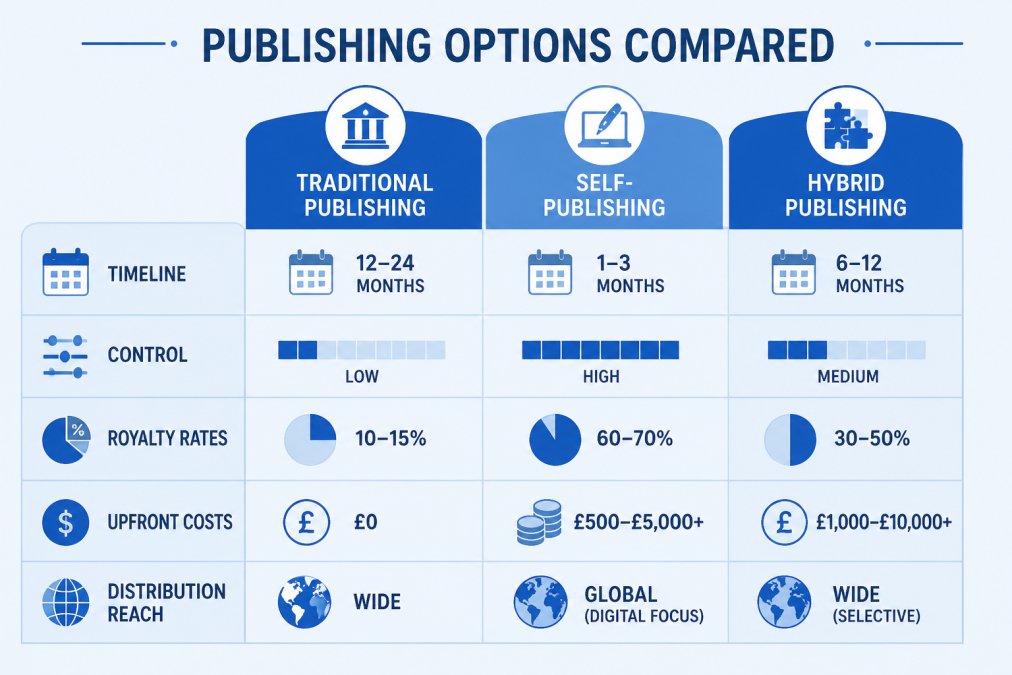
Getting a novel published in 2026 means navigating three fundamentally different paths, each with its own timeline, control structure, and financial reality. The choice you make shapes everything that follows: how long your journey takes, how much creative control you retain, and how your book reaches readers.
Traditional Publishing
Traditional publishing remains the pathway most writers imagine when they dream of seeing their book in bookstores. A publisher acquires your manuscript, handles editing, cover design, printing, and distribution in exchange for a percentage of sales. You typically receive an advance against future royalties.
The trade-off is clear: you lose control over cover design, title, and release timing. However, traditional publishers get your book into physical bookstores and major online retailers in ways self-publishing cannot easily replicate.
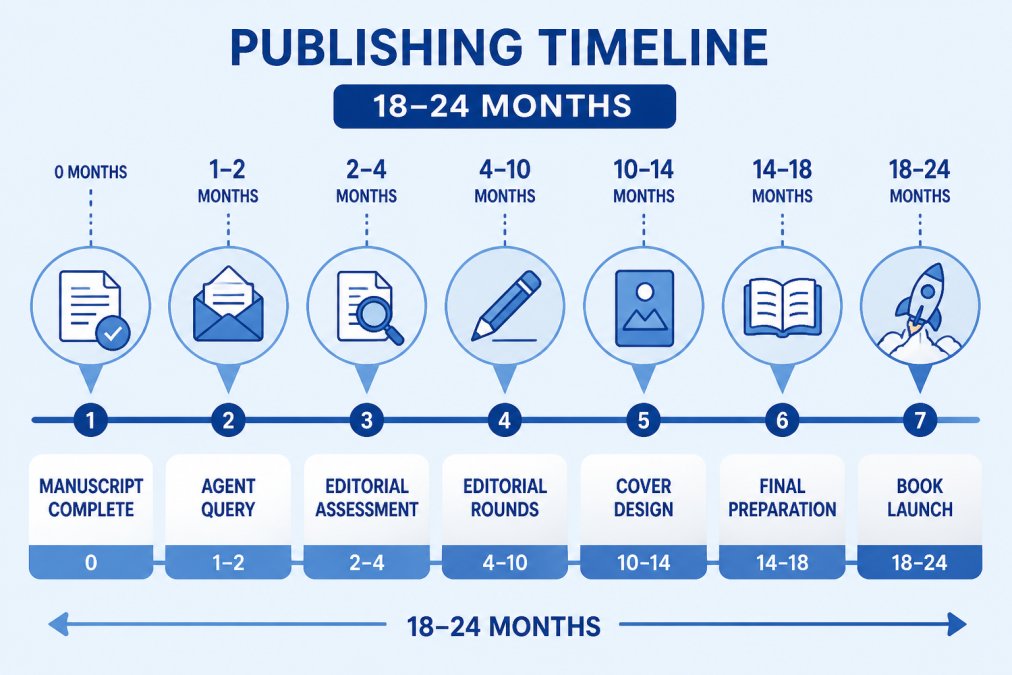
The timeline for traditional publishing typically spans 18-24 months from manuscript acceptance to publication (publishers.org). If you're starting from scratch, add another 6-12 months for agent queries and manuscript refinement.
Self-Publishing and Independent Routes
Self-publishing hands you complete creative control and a significantly higher royalty percentage. You decide the cover, title, launch date, and marketing strategy. You keep more money per sale, but you also bear all the costs and risks.
Self-publishing works best when you have an existing audience or a clear marketing strategy. A debut author with no platform faces a steeper climb, though the barrier to entry remains low.
Hybrid Publishing: What to Watch For
Hybrid publishing sits between traditional and self-publishing, promising professional services and distribution support while you retain creative control. In practice, hybrid models vary wildly, and some operate as barely disguised vanity presses.
The key distinction: legitimate hybrid publishers invest their own money in your book and take a percentage of sales. They're financially motivated to make your book succeed. Vanity presses charge you upfront fees and profit regardless of whether your book sells. When evaluating a hybrid publisher, ask directly: do they invest in your book, or do you pay them? A publisher unwilling to answer clearly is a red flag.
The Manuscript Development Services That Matter
Before you can publish anything, you need a manuscript worth publishing. Most first drafts contain structural problems you won't see until you step back and examine the whole thing with fresh eyes.
Preparing Your Manuscript for Market
A finished first draft is not a finished manuscript. Plot holes appear. Character motivations become unclear. Pacing drags in places where it should move.
Professional manuscript development focuses on these larger structural and narrative issues before copy editing begins. A manuscript development coach examines whether your premise delivers what it promises, whether your ending satisfies the emotional contract you made with the reader in chapter one, and whether your supporting characters serve the central narrative.
This stage typically involves multiple rounds of feedback and revision. Most authors spend 3-6 months in active manuscript development (peer-reviewed research).
Editorial Standards and Professional Feedback
Professional feedback differs fundamentally from feedback you get from writing groups or friends. A developmental editor identifies what's working and what isn't, and explains why. They spot patterns you've missed because you're too close to the work.
The best editorial feedback is specific. Instead of "this chapter feels slow," a good editor explains exactly which scenes drag, why they drag, and what you might do to fix them. Developmental editing focuses on story structure and narrative flow. Line editing examines prose style and sentence clarity. Copy editing catches grammar and spelling errors. Proofreading happens last and catches remaining mistakes.
Creative Writing Coaching: Building Your Foundation
Getting a novel published starts long before you have a finished manuscript. It starts with developing the skills to write one worth publishing.
How Coaching Differs from Writing Groups and Online Courses
A writing group offers community and peer feedback. An online course teaches craft principles at scale. Coaching is personalized, ongoing support focused specifically on your manuscript and your growth as a writer.
A coach works with you over time, understanding your strengths and weaknesses, your genre, your voice, and your specific challenges. After your coach reads your first draft, they understand your instincts and blind spots. When you submit your second draft, they can tell you exactly what's improved and what still needs work.
Working with Limited Time Commitments
Most aspiring authors don't have unlimited time. Consistent small sessions often produce better results than occasional marathon writing days. An hour of focused writing five days a week beats ten hours of distracted writing on a Saturday. A coach who meets with you weekly and assigns structured homework between sessions works well for people with limited time. Over months and years, incremental progress adds up to a finished manuscript.
The Publishing Timeline: What to Expect
Understanding the publishing timeline prevents unrealistic expectations about how long everything takes. Getting a novel published in 2026 is rarely a fast process, even with self-publishing.
From Manuscript to Market Ready
If you're pursuing traditional publishing, the timeline begins with a polished manuscript and a literary agent. Finding an agent typically takes 3-12 months (publishers.org). Once an agent offers representation, they begin pitching your manuscript to publishers, a process that typically takes 3-6 months.
After a publisher acquires your manuscript, the production timeline begins. Developmental editing takes 2-3 months, followed by revision. Line editing and copyediting follow, each requiring revision time. Cover design happens in parallel. The entire production process typically spans 12-18 months from acquisition to publication.
Total timeline for traditional publishing: 18-24 months minimum from a polished manuscript to published book.
Self-publishing compresses this timeline dramatically. You can publish within weeks if you have a finished manuscript and money for professional services. However, rushing to publish quickly often means cutting corners on editing or design. Most successful self-published authors still spend 3-6 months on manuscript development and production.

Literary Agents and Query Letters
A literary agent is your advocate in the traditional publishing world. They have relationships with editors at publishing houses and understand what each publisher is actively acquiring. They negotiate contracts and protect your interests.
Finding the right agent starts with research. You identify agents who represent your genre, study their submission guidelines, and craft a query letter. A query letter is a one-page pitch that introduces your book, establishes why you're qualified to write it, and explains why this particular agent is the right fit. Expect rejection. Most agents reject the vast majority of queries they receive.
Author Marketing Strategies 2026: Building Your Platform
In 2026, publishing a novel successfully requires thinking about marketing before your book is published. You don't need to be a social media influencer, but you should have some audience and a clear idea of how to reach readers.
Creating Your Author Platform Before Publication
An author platform is your existing audience and your ability to reach them. It might be a newsletter with engaged subscribers, a social media following in your genre, a podcast, a blog, or professional credibility that translates to reader interest. Publishers love authors with platforms because they reduce marketing risk.
Building a platform before you publish takes time and consistency. You're not trying to become famous, you're trying to build genuine connections with people interested in your genre and your voice.
Book Launch and Post-Publication Growth
A book launch is a concentrated marketing effort around your publication date. An effective launch strategy includes reaching out to book bloggers and reviewers before publication, coordinating social media posts and newsletter announcements, and encouraging early readers to leave reviews.
Most books sell the majority of their copies in the first 90 days, but sustained sales come from ongoing visibility. The authors who see the most post-publication success treat their book like a long-term asset. They continue writing, because a second book is the best marketing for your first book.
Budgeting and Industry Realities for 2026
The financial reality of publishing varies dramatically depending on your path. Understanding the costs and potential returns helps you make realistic decisions.
What Publishing Actually Costs
Traditional publishing costs you nothing upfront. The publisher invests in editing, cover design, printing, and distribution. You receive an advance and royalties on sales.
Self-publishing requires you to invest in professional editing, cover design, and formatting. Hybrid publishing typically charges authors upfront fees in exchange for publishing services and distribution support. Legitimate hybrid publishers invest their own money and charge reasonable fees.
Distribution Channels and Royalty Rates
Where your book is sold determines how readers discover it. Traditional publishers secure placement in physical bookstores and major online retailers. Self-published books primarily sell through Amazon, though distribution services can expand reach to other retailers.
The real financial picture depends on sales volume. A self-published book earning higher royalty rates that sells fewer copies may generate less revenue than a traditionally published book earning lower royalty rates that sells more copies. Volume matters more than percentage.
Your Next Step: From Manuscript to Published Author
Getting a novel published in 2026 requires clarity about what you actually want. Do you want to see your book in physical bookstores? That typically means traditional publishing. Do you want to maintain complete creative control? Self-publishing gives you that. Do you want professional support without full traditional publishing? Hybrid publishing might work, if you choose carefully.
Regardless of your path, the foundation is the same: a manuscript worth publishing. This is where coaching and manuscript development services matter. Writing a novel is hard. Writing a publishable novel is harder. The difference between a manuscript that gets rejected and one that gets published often comes down to revision, feedback, and professional guidance.

WriteInspire offers expert creative writing coaching and resources designed to help new storytellers and authors master their craft. We work with writers through this exact journey, from manuscript development through publication strategy. We understand the publishing landscape in 2026 because we live in it. Our coaching focuses on rigorous manuscript development rather than vanity publishing encouragement. We stress-test your story the way the marketplace will: examining clarity, structure, pacing, character logic, and whether your ending actually delivers what your premise promises.
If you have a manuscript that's been sitting in a drawer, or a story you can feel in your bones but don't know how to execute, the next step is professional guidance. Consider working with a manuscript development coach who can help you understand what your story needs and guide you through the revision process. Whether you ultimately pursue traditional publishing, self-publishing, or hybrid publishing, a stronger manuscript makes every path easier.
The publishing landscape in 2026 offers more options than ever. You can reach readers through traditional channels, direct-to-reader platforms, or hybrid models. What hasn't changed is this: readers still want great stories, well told. Focus on making your manuscript genuinely excellent. The publishing path becomes clearer once you have something worth publishing. With WriteInspire's manuscript development support and coaching resources, you have the tools to transform your story from idea to finished manuscript to published book. Creative Story Mastery module on publishing options covers the business side of storytelling with the professionalism and authenticity your work deserves.
Frequently Asked Questions
How is creative writing coaching different from joining a writers' group or taking an online course?
Creative writing coaching provides personalised, one-on-one feedback tailored to your specific manuscript and goals. Unlike writers' groups where feedback is peer-based, coaching comes from experienced professionals who stress-test your work the way the marketplace will: examining clarity, structure, pacing, character logic, and emotional payoff. Online courses teach technique; coaching applies technique to your actual story and guides you through revisions. The difference is accountability and customisation, a coach works with your unique voice and challenges, not generic writing principles.
What should I focus on when preparing my manuscript for the 2026 publishing market?
Publishers and agents in 2026 expect manuscripts that are structurally sound, editorially polished, and market-aware. Focus on clarity of your central premise, consistent character logic, and whether your ending delivers what your opening promises. Ensure your manuscript meets genre expectations, readers and gatekeepers notice when it doesn't. Proofreading matters, but structural integrity matters more. Know your target audience and position your work honestly within that category. Consider how your story fits current market trends without chasing trends so hard your voice disappears.
What is the difference between vanity publishing and professional author support?
Vanity publishing charges authors upfront to print and distribute their work, with little editorial guidance or marketing support. The publisher profits from printing fees, not book sales. Professional author support, whether through traditional publishing, hybrid publishing with reputable partners, or coaching-led self-publishing, focuses on manuscript quality first. The goal is a book that sells and builds your author platform, not just getting your name in print. Real support includes editorial feedback, cover design guidance, metadata optimisation, and integrated marketing strategies that help readers find your work.
How much time do I actually need to commit to get a novel published?
Most writers underestimate the time required. Traditional publishing typically takes 18-24 months from agent acceptance to bookshelf. Self-publishing can be faster, 6-12 months, but requires you to manage every step. However, you don't need massive blocks of uninterrupted time. Many writers complete novels working one to two hours per week, consistently. What matters is regular practice and structured support. A writing coach helps you use your available time efficiently, turning small pockets of time into genuine progress rather than scattered, directionless effort.
What are the current publishing industry trends for 2026?
The 2026 publishing landscape includes traditional houses still valuing strong manuscripts with author platforms, self-publishing becoming more competitive as more writers enter the space, hybrid publishing gaining legitimacy when partners are reputable, and AI-assisted tools offering new workflows for manuscript development and marketing. Digital distribution and print-on-demand technology mean global reach is possible for independent authors. However, the barrier to standing out has risen, a finished manuscript is no longer enough. Publishers and readers expect clear positioning, professional presentation, and an author willing to engage in marketing.
Do I need a literary agent to get published?
For traditional publishing, most major houses require agent representation, though some accept unagented submissions. A literary agent handles contract negotiation, royalty management, and industry relationships on your behalf. However, agents only take clients whose work they believe is marketable. Self-publishing and many hybrid publishing routes don't require an agent. The real question is whether your manuscript is ready for agent submission, most agents receive hundreds of queries monthly and accept only a handful. Manuscript development and coaching significantly improve your chances of agent interest.
Can I really make money from publishing a novel?
Yes, but expectations matter. Most authors earn modest income from their first novel. Traditional publishing offers an advance (typically £1,500-£5,000 for debut fiction) against future royalties, plus royalties on sales (usually 10% of paperback sales, 25% of eBook sales). Self-published authors keep higher royalty percentages but must cover production and marketing costs upfront. Success depends on genre, marketing effort, and reader reach. Building an author platform before publication, understanding your target audience, and treating your book as the start of a writing career, not a one-off project, significantly improves financial outcomes.
What happens after my book is published?
Publication is the beginning, not the end. Post-publication lifecycle management includes ongoing marketing, building reader relationships through email and social platforms, gathering reviews and testimonials, and planning your next project. Publishers expect authors to actively promote their work. Many successful authors use their first book to build an audience for a second. Metadata optimisation, bookstore placement, and digital distribution all continue after launch. Having a marketing plan before publication, not after, means you're ready to capitalise on launch momentum and build sustainable readership.
This article was written using GrandRanker