

Table of Contents
- What a Professional Creative Writing Coach Actually Does
- Benefits of Professional Writing Coaching for Your Manuscript
- Writing Coach vs Developmental Editor: Which Do You Need?
- Creative Writing Coaching Rates and What's Included
- How to Choose the Right Professional Creative Writing Coach
- Signs You're Ready for a Writing Coach
- What a Coaching Session Looks Like and How to Get Started
- Conclusion
Last Updated: August 23, 2026
What a Professional Creative Writing Coach Actually Does
A professional creative writing coach is a mentor who works one-on-one with writers to develop their craft, shape manuscripts, and build accountability through structured guidance. Unlike a developmental editor who focuses on revising finished work, a writing coach walks alongside you from the earliest spark of an idea through to completion, helping you discover what your story is really about and how to tell it with power.
WriteInspire brings over 30 years of experience in creative writing coaching, distinguishing itself by refusing to act as a vanity publisher. The focus is rigorous manuscript development and craft mastery, not polishing work that's already done. A writing coach asks hard questions: What is this story really about? Why should readers care? Where does the narrative lose momentum? They help you build the architecture of your work before you're deep in the drafting stage, which saves months of revision later.
The work happens in sessions, sometimes monthly check-ins, sometimes weekly accountability calls. Between sessions, your coach reads drafts, identifies patterns in your writing, and creates custom exercises for your specific manuscript. They're part mentor, part accountability partner, part editor. The difference from a writers' group is the personalisation; the difference from an online course is the real-time feedback and the relationship itself.
Benefits of Professional Writing Coaching for Your Manuscript
Working with a writing coach transforms the entire experience of bringing a manuscript to life. The most obvious benefit is finishing. Many writers carry half-written novels in their heads for years; a coach provides the structure and accountability that turns intention into pages.
Beyond completion, coaching accelerates your growth as a storyteller. You learn to think like a writer. A coach teaches you craft fundamentals: how to build narrative tension, develop characters with genuine depth, structure scenes that reveal character through action, and recognise when dialogue is doing real work versus filling space (peer-reviewed research). These skills develop through applied practice with expert feedback.

The manuscript itself improves dramatically. A coach helps you identify the emotional core of your story before you've written 50,000 words in the wrong direction. They catch structural problems early, pacing that sags, characters who disappear, plot threads that go nowhere. This is developmental guidance at the level where it actually matters. You avoid writing a technically correct but emotionally flat manuscript that requires a complete rewrite.
There's also the psychological benefit. Writing accountability is a real obstacle for independent creatives. A coach provides external structure when your own discipline falters. They celebrate progress, push back on excuses, and remind you why the work matters when you're staring at a blank page. For writers juggling day jobs, family, and creative ambition, this consistency is often the difference between finishing and abandoning.
Writing Coach vs Developmental Editor: Which Do You Need?
The distinction matters because they serve different purposes at different stages of your writing journey.
A developmental editor works on a manuscript that's essentially complete (editors.ca). They read the full draft and provide high-level feedback: Does the structure work? Are the characters compelling? Where does the pacing drag? They might suggest major revisions, but they're working with material that exists.
A professional creative writing coach begins much earlier. They work with you during the planning phase, before you've written thousands of words. They help you clarify your story premise, develop your characters, and design a structure strong enough to carry your narrative. Then they walk alongside you through drafting, reading chapters as you write and adjusting course before you've invested months in the wrong direction.
The coaching relationship is also ongoing and personalised in a way developmental editing typically isn't. An editor delivers feedback on a completed manuscript; a coach provides continuous guidance tailored to your specific project, your writing habits, and your growth edges.
Choose a coach if you're starting a new manuscript, if you've been stuck on the same project for years, or if you want to develop your craft while you write. Choose a developmental editor if you have a complete draft that needs structural feedback before you query agents or self-publish.
Many writers do both: they work with a coach to draft and develop, then hire a developmental editor to polish the final manuscript before publication.
| Approach | Best For | Timing | Focus | Relationship |
|---|---|---|---|---|
| Writing Coach | New manuscripts, ongoing development, craft growth | Planning through drafting | Story structure, character development, accountability | Ongoing partnership |
| Developmental Editor | Completed drafts, structural feedback | After first draft complete | High-level revision, pacing, narrative arc | Project-based consultation |
Creative Writing Coaching: What's Included
Writing coaching varies significantly in structure and investment. Understanding what you're paying for helps you choose the right fit.
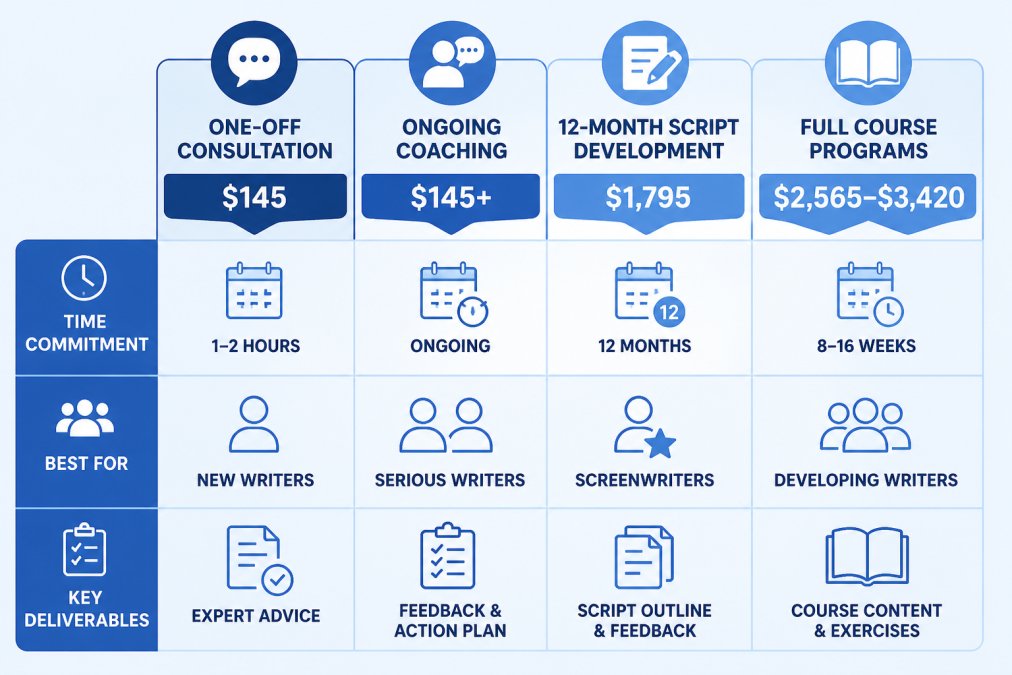
A one-off writing consultation, a single session to discuss your manuscript, get feedback on a chapter, or work through a specific problem, works well if you have a specific question or want to test whether coaching feels like the right fit before committing to ongoing support.
Ongoing coaching structured around regular sessions (monthly or fortnightly check-ins) builds accountability and momentum. Between sessions, your coach reads drafts, provides written feedback, and creates exercises tailored to your manuscript.
For writers serious about completing a full manuscript with intensive support, a 12-month program like WriteInspire's Script Development Program offers structured guidance across the entire year. This includes monthly one-on-one sessions with your coach, ongoing script reading between sessions, custom exercises and deadlines, and access to broader workshop and course resources. You're getting a professional story partner who's invested in your success across an entire year.

For writers wanting comprehensive training alongside coaching, structured programs combine course modules with supported guidance. These include training in story structure, character development, scene work, and action writing, plus monthly coaching sessions to apply those principles to your manuscript.
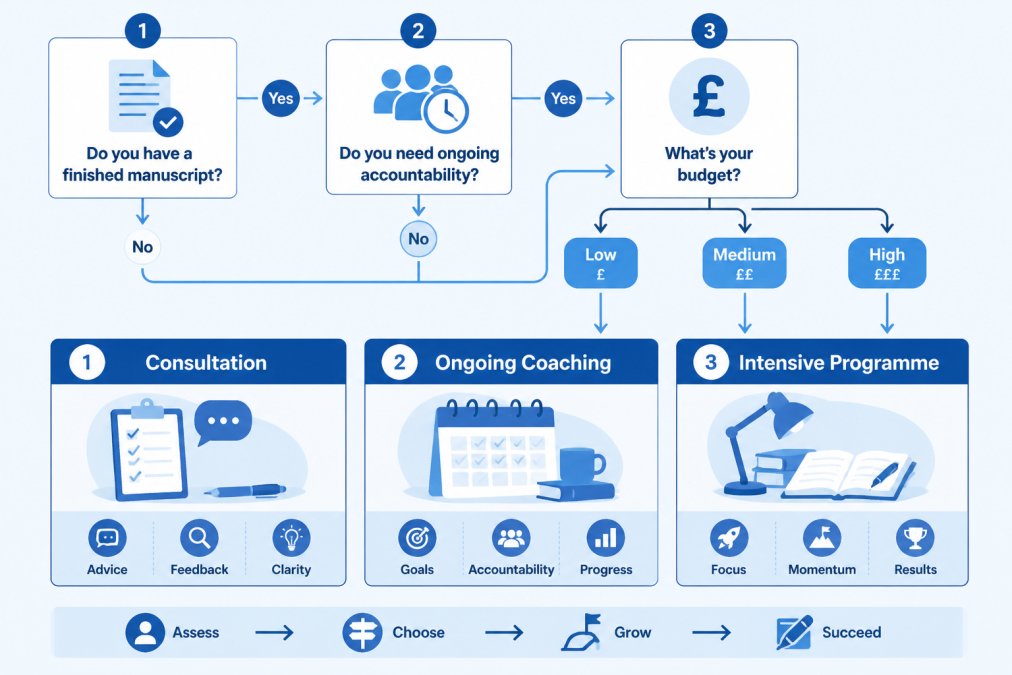
The key question isn't which option is best; it's which matches your manuscript stage and your commitment level. A writer with three chapters and a vague outline benefits from ongoing coaching to build structure. A writer with a complete but messy draft might get more value from a developmental editor. A writer wanting to master the craft while developing a specific project might choose a comprehensive program.
How to Choose the Right Professional Creative Writing Coach
Finding the right coach means understanding your needs, vetting for real qualifications, and ensuring the working relationship will actually support your growth.
Vetting for Real Qualifications and Publishing Experience
This is where many writers stumble. Anyone can call themselves a writing coach. What separates a genuine mentor from someone selling false confidence?
Look for published work. A real writing coach has either published their own manuscripts or has a track record of helping writers get published. Ask directly: What have you published? What manuscripts have you helped to completion? Can you name writers you've worked with who've gone on to publish?
Experience matters. Thirty years of writing and producing experience, like WriteInspire brings to the table, means your coach has lived through multiple publishing cycles, understands how the industry actually works, and has solved problems you haven't encountered yet (publishers.org). They know the difference between a promising manuscript and one that's fundamentally broken.
Ask about their specific approach. A good coach can articulate their methodology. Do they work on story structure first, then character? Do they focus on your voice and style, or on plot mechanics? There's no single right answer, but you want someone whose approach aligns with how you work best.
Check for teaching credentials or formal training in craft. Many coaches have studied narrative theory, taken advanced workshops, or worked in publishing. This background shows they've invested in understanding storytelling at a deeper level.
Understanding Contracts and What to Expect
Before you commit, get clarity on what the working relationship actually looks like.
How often do you meet, and how are sessions scheduled? Monthly sessions look different from weekly accountability calls. Understand what fits your reality.
What happens between sessions? Does your coach read drafts, or do you only get feedback during scheduled calls? How quickly can you expect written feedback? This matters for maintaining momentum.
What are the boundaries of the work? Does the coach help with query letters and publishing strategy, or strictly manuscript development? Do they offer editing services, or do they coach you through self-editing? Some coaches include access to broader resources, workshops, and community forums as part of their package.
What's the commitment level? Understand whether you're committing to a specific timeframe and what the cancellation policy is.
How is feedback delivered? Some coaches provide detailed written notes; others work primarily in conversation. Some combine both. Know what to expect so you can plan your revision process.
Signs You're Ready for a Writing Coach
Not every writer needs a coach, and not every manuscript stage benefits from coaching. Recognising when you're ready saves money and frustration.
You're ready if you have a story idea but no clear structure. A coach helps you design the architecture before you write thousands of words in the wrong direction. This is where coaching delivers the most value.
You're ready if you've been working on the same manuscript for years without finishing. A half-finished novel in a drawer is a sign that you need external accountability and structure. A coach provides both.
You're ready if you want to develop your craft while you write. If you're serious about becoming a better storyteller, coaching accelerates that growth through applied practice with expert feedback.
You're ready if you're coming to writing after years away, or if you're starting fresh with no formal training. A coach helps you build solid foundations in narrative structure and character development.
You're probably not ready if your manuscript is already complete and polished. At that point, a developmental editor or beta reader group might serve you better.
You're probably not ready if you're looking for someone to fix your writing or to promise publication. A coach is a skilled mentor who helps you do your own best work. The effort still comes from you.
What a Coaching Session Looks Like and How to Get Started
Understanding the actual experience of coaching helps you know what to expect.
A typical session begins with you sharing where you are with your manuscript. What did you draft since last time? What problems are you stuck on? A good coach listens more than talks in these opening minutes, gathering information about where your thinking is.
Then the work begins. If you've brought a chapter, they might read it aloud with you, stopping to ask questions: Where does the tension drop? What's this scene really about? Is this the clearest way to show this character's motivation? If you're stuck on structure, they might ask you to map out your story premise, theme, and emotional arc.
The coach offers specific feedback. Not "This is good" or "This needs work," but concrete observations: "Your dialogue reveals character beautifully, but it's doing double duty, it's also explaining the plot. Can the action show what the dialogue is telling?" They identify patterns in your writing and help you understand why and how to improve.
Between sessions, you apply what you've learned. You draft new material, revise based on feedback, or work through custom exercises your coach created for you. You're actively building your manuscript and your skills.
To get started, reach out to a coach whose approach resonates with you. Many offer a free consultation or a single paid session to see if the fit is right. Ask questions about their process, their experience, and what they expect from you. Be honest about your manuscript stage, your goals, and your constraints. A good coach will tell you whether they're the right person for your project.

WriteInspire's Writing Consultation Creative Support offers exactly this: a private, one-on-one session tailored to your needs, designed to build clarity and confidence in your work. Whether you're testing the waters or diving into ongoing coaching, that first conversation clarifies what you need and whether a coaching relationship makes sense for your manuscript.
Finding the right professional creative writing coach transforms the experience of bringing your manuscript to life. The combination of expert feedback, structured accountability, and personalised guidance addresses the obstacles that stop most writers from finishing. If you're serious about completing your manuscript and developing your craft, coaching accelerates both. WriteInspire's approach, rigorous, focused on craft mastery rather than vanity publishing, and built around genuine partnership with your story, reflects what makes coaching genuinely valuable. Your manuscript deserves a professional story partner who believes in the work and knows how to help you finish it.
Frequently Asked Questions
What does a professional creative writing coach actually do?
A professional creative writing coach works with you on manuscript development, story structure, character depth, and craft. Unlike an editor who corrects grammar, a coach builds your skills and shapes your story from the ground up. They help you clarify what your story is really about, develop strong narrative arcs, strengthen characters, and keep you accountable to finish your manuscript. The focus is on building your capability as a storyteller, not just fixing what's already written.
How do writing coach vs developmental editor roles differ?
A writing coach focuses on your process, craft development, and accountability, helping you build the manuscript and your skills together. A developmental editor typically works on a completed or near-complete draft, offering detailed feedback on structure and content. Coaches are better if you're still drafting or need ongoing support; editors suit writers ready for detailed critique of finished work. Many writers benefit from both at different stages.
What are typical creative writing coaching rates?
Rates vary by scope. A single consultation runs around $145 and suits writers needing focused feedback on a specific problem. Ongoing coaching starts at $145 per session for flexible support. Intensive 12-month programs with monthly sessions, custom exercises, and between-session feedback cost around $1,795. Full structured courses with guided resources range from $2,565 to $3,420. Your budget and time commitment determine which option fits.
Is a writing coach worth the investment if I've never finished a manuscript?
Yes, especially if you've started projects but stalled. A coach provides the accountability structure, craft guidance, and story clarity that many writers need to actually finish. Rather than leaving your manuscript in a drawer, coaching builds momentum through regular sessions, clear deadlines, and someone invested in your progress. The investment pays off when you have a completed, properly shaped manuscript instead of an abandoned draft.
How do I know if I'm ready for professional writing coaching?
You're ready if you have a story idea or partial manuscript you're serious about finishing, you're willing to put in real work between sessions, and you want feedback beyond your writing group or friends. You don't need a finished draft, coaches work with writers at all stages. What matters is commitment: coaching works best when you show up, do the exercises, and trust the process even when it feels uncomfortable.
This article was written using GrandRanker