

Table of Contents
- What Is Manuscript Development?
- Types of Manuscript Services: Developmental Editing for Fiction and Beyond
- Understanding Manuscript Assessment Services
- Creative Writing Coaching Benefits for Manuscript Development
- How to Choose the Right Manuscript Development Service
- What to Expect from the Manuscript Development Process
- Self-Editing Before Professional Development
- Conclusion
Last Updated: August 17, 2026
What Is Manuscript Development?
Manuscript development services go far beyond fixing typos or grammar mistakes. It's the process of shaping your entire story, its structure, pacing, character arcs, and emotional resonance, into something that genuinely works on the page. Think of it as having a skilled storytelling partner who reads your draft with a critical eye and helps you see what's actually happening versus what you intended.
The difference between a half-finished manuscript in a drawer and one that's submission-ready often comes down to rigorous feedback. Many writers finish a first draft and send it out, only to get rejected without understanding why. That's where manuscript development steps in.
WriteInspire has spent over 30 years working with writers at every stage, from those with a spark of an idea to authors with completed drafts needing serious structural work. The approach isn't about polishing, it's about building the story properly from the ground up.
How It Differs from Copyediting and Proofreading
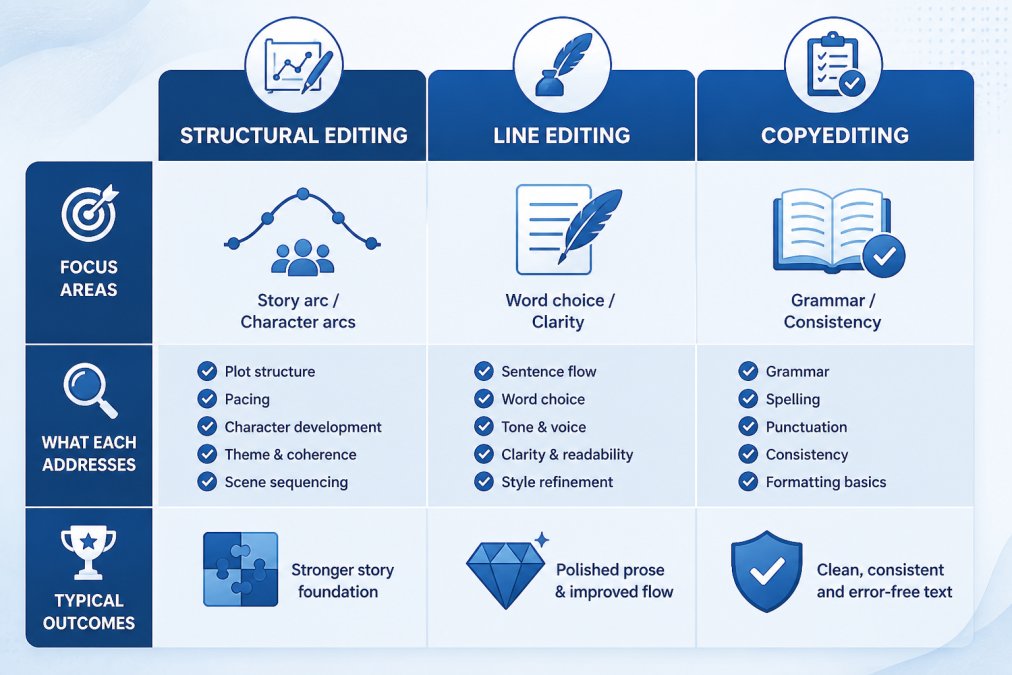
Copyediting and proofreading are tactical: they fix word choice, grammar, punctuation, and consistency. They make your manuscript cleaner. But they don't address whether your story actually works.
Developmental editing is strategic. It asks the hard questions: Does your opening hook the reader? Is your protagonist's motivation clear? Does the plot escalate, or does it meander? Are there plot holes? Does your ending deliver on the promise of your premise?
Proofreading catches "their" when you meant "there." Copyediting tightens prose and ensures consistency. Developmental editing examines whether your story structure supports your characters' journeys and whether pacing keeps readers turning pages. You need all three, but they happen in order: develop first, then line edit, then proofread.
Types of Manuscript Services: Developmental Editing for Fiction and Beyond
Manuscript development services come in several forms, each addressing different aspects of your work.
Structural Editing and Story Arc
Structural editing focuses on the big picture: plot, pacing, narrative flow, and character development. A structural editor looks at your story arc. Does it have a clear beginning that establishes stakes? A middle that escalates tension? An ending that feels earned rather than convenient?
They examine whether scenes are in the right order, whether subplots support or distract from your main story, and whether character development feels inevitable or forced. This is especially critical for fiction. A novel with weak structure will lose readers no matter how beautiful the prose is. Structural editing catches problems like a protagonist who doesn't drive the action, a midpoint that doesn't shift the story, or a climax that doesn't feel like the natural culmination of everything before it.
Line Editing and Clarity
Line editing works at the sentence level. It's about how you're telling the story, not whether the story itself works. A line editor examines your prose for clarity, rhythm, word choice, and voice consistency.
They ask: Is this sentence clear? Are you using active voice? Is your vocabulary consistent with your narrator's voice? Do your metaphors land? Line editing makes your manuscript readable and engaging at the sentence level. A structurally sound manuscript with muddy prose will still struggle. A well-structured manuscript with crisp, clear prose will connect with readers.
Understanding Manuscript Assessment Services
A manuscript assessment is a one-time, comprehensive evaluation of your work, a detailed report that tells you exactly what's working, what isn't, and what needs to happen next. It's a diagnostic tool. Before you invest months in revision, you need to know: Is this manuscript salvageable? What are the core problems? What's the priority order for fixing them?
What an Editorial Report Reveals
A solid editorial report breaks down your manuscript across several dimensions: story concept and premise, plot structure and pacing, character development and motivation, dialogue and voice, prose quality and style, and overall submission readiness.
It identifies specific problems with examples from your manuscript. Not "your pacing is slow" but "your second act drags between chapters 6 and 9 because the protagonist is reacting instead of driving the action." A good assessment also explains why these problems matter and what you can do about it. Many writers receive an assessment and suddenly understand their manuscript in a completely different way.
Creative Writing Coaching Benefits for Manuscript Development
Coaching is different from assessment or editing. With coaching, you have an ongoing relationship with someone who understands your work, your goals, and your challenges. They help you develop not just this manuscript, but your skills as a writer.
Building Accountability and Momentum
Finishing a manuscript is as much about discipline as it is about talent. Many writers get stuck at chapter 8 or 20 and never finish. A coach provides accountability through scheduled check-ins, specific deadlines, and someone asking: "Where are you at? What's blocking you? What's next?"
Beyond accountability, a coach helps you navigate the emotional terrain of writing. Doubt is normal. So is getting lost in your own story. A coach who's been through this process can say: "This is a common wall. Here's how we get past it." They've seen writers freeze up at the midpoint, panic about their ending, or lose confidence in their protagonist. They know the patterns and can help you work through them.

Mentorship in the Publishing Industry
A mentor in publishing helps you understand the landscape. What do agents actually want? How do you pitch? What makes a manuscript competitive? What are realistic expectations for your genre?
This matters because many writers finish a manuscript with no idea how to move forward. They don't know whether to query agents, submit to publishers directly, or self-publish. A mentor who's worked in publishing can guide you toward the right path for your specific work and goals.
WriteInspire's coaching approach combines rigorous manuscript development with industry mentorship. The focus is on building your craft while preparing your work for the real world, whether that's submission, pitching, or publication.
How to Choose the Right Manuscript Development Service
Not all manuscript services are equal. Some are genuinely rigorous; others tell you your work is brilliant regardless of reality. Choosing the right one requires understanding what you actually need and evaluating who can deliver it.
Assessing Your Manuscript's Readiness
Be honest about where your manuscript is. Is it a rough first draft? A completed manuscript you've revised once? A polished draft you've worked on for years? The stage your manuscript is in determines what kind of service makes sense.
A rough first draft benefits most from structural coaching. A completed manuscript that's been through several rounds of revision might be ready for a manuscript assessment. A nearly finished manuscript might only need line editing and copyediting.
Many writers waste resources hiring services when their manuscript isn't ready for that level of work. If you're on draft two and still discovering your story, paying for copyediting is premature. Be realistic about what stage you're in. If you're uncertain, a consultation can help clarify.
Evaluating Editorial Credentials and Experience
Anyone can call themselves an editor. But has this person actually worked in publishing? Have they edited manuscripts that were published? Do they understand your genre?
Look for editors who can show their experience. What kinds of manuscripts have they worked on? What's their background? Someone with 30 years of experience in storytelling and manuscript development has seen patterns you haven't. They know what works and what doesn't because they've watched it play out across dozens of projects.
Also ask about their process. How do they give feedback? Do they provide a detailed report or just comments on the manuscript? Will they work with you through revisions? The best editors don't just identify problems; they help you understand how to fix them.
What to Expect from the Manuscript Development Process
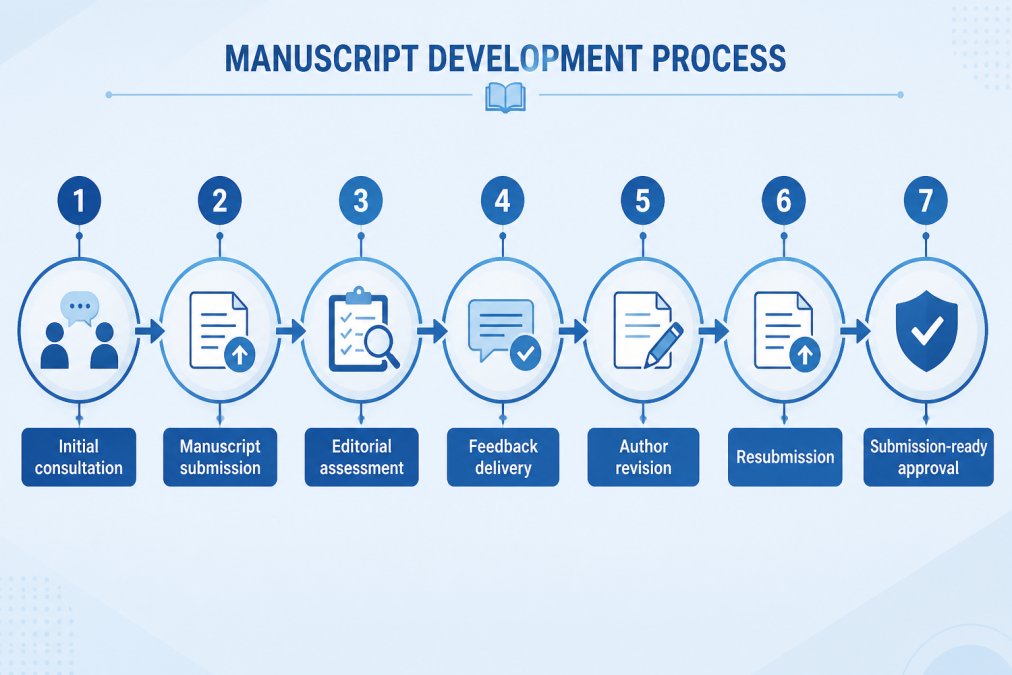
Understanding the process demystifies it. Most manuscript development follows a similar arc, though details vary by service.
Initial Consultation and Scope Definition
This is where you and your editor or coach clarify what you're working on and what you need. You discuss your manuscript: genre, word count, where it is in development, what you're struggling with. You talk about your goals. Are you aiming for traditional publication? Self-publishing? Just finishing something you care about?
The editor asks questions that help them understand your vision and help you clarify your own thinking. From this conversation, you define scope: Are you working on structure? Line editing? A full developmental assessment? How many rounds of revision? What's the timeline?
Feedback, Revision, and Submission Readiness
After you submit your manuscript, the editor reads it carefully, usually multiple times, taking notes on structure, character, pacing, dialogue, and prose quality. They identify patterns, recurring issues that point to deeper problems.
Then they deliver feedback. Good feedback is specific and actionable. It doesn't just say what's wrong; it explains why it's a problem and suggests directions for fixing it.
Revision is where the real work happens. You receive feedback and must make decisions. Do you agree with the editor's assessment? What changes will you make? Many writers find this phase challenging because it requires both openness to criticism and confidence in your own vision. A good editor or coach helps you navigate this balance.
After revision, you resubmit. The editor reviews your changes and helps you understand what submission readiness actually means. It doesn't mean perfect, no manuscript is perfect. It means your story is clear, your characters are compelling, your structure supports your narrative, and your prose is professional.
Self-Editing Before Professional Development
The work you do before hiring a professional matters enormously. Self-editing isn't a substitute for professional development, but it's a necessary foundation.
Preparing Your Manuscript for Assessment
Before you send your manuscript to an editor, read it yourself with a critical eye. Not for typos, read for story. Does it work? Where did you lose interest? Where did you get confused? Where did a character's action not make sense?
Make notes. Mark sections that feel slow. Flag dialogue that sounds unnatural. Identify plot holes or inconsistencies. This isn't about fixing everything yourself; it's about understanding your manuscript well enough to ask the right questions when you get professional feedback.
Many writers benefit from setting their manuscript aside for a few weeks before reading it again. Distance gives you perspective. Also, have trusted readers give you feedback, thoughtful people who read widely in your genre. What did they understand about your story? Where did they lose interest? This feedback tells you how actual readers experience your work.
Do a final proofread before submission. A clean manuscript shows respect for the editor's time and suggests you're a professional.
Finishing a manuscript is genuinely hard. Getting feedback on it is harder still. But the writers who succeed treat their manuscript development seriously. They understand that a finished draft isn't the same as a publishable manuscript. They invest in rigorous feedback, do the revision work, and build their craft alongside their story.
WriteInspire's approach to manuscript development reflects this reality. Through services like the Script Development Program and Writer Coaching & Guided Resources, the focus is on building real skill, not just polishing surface-level issues. Whether you're working with a developmental editor, a manuscript assessment, or an ongoing coach, the goal is the same: turn your manuscript into something that genuinely works and positions you as a serious writer.

| Service Type | Best For | Outcome |
|---|---|---|
| Manuscript Assessment | Identifying core problems before revision | Detailed diagnostic report with priorities |
| Developmental Coaching | Building manuscript and craft over time | Completed, submission-ready manuscript |
| Structural Editing | Fixing plot, pacing, character arcs | Restructured manuscript with clear narrative flow |
| Line Editing | Improving prose clarity and voice | Polished, readable manuscript |
| Consultation | Quick feedback on specific questions | Targeted guidance on one or two issues |
Frequently Asked Questions
What is the difference between manuscript assessment and developmental editing?
A manuscript assessment service provides an independent evaluation of your work, typically delivered as a detailed editorial report that identifies strengths and weaknesses in structure, character development, pacing, and narrative flow. Developmental editing is hands-on collaboration where an editor works with you to actively reshape and improve your manuscript. Assessment gives you a roadmap; developmental editing guides you through the rewrites themselves.
Is professional writing coaching worth it for new authors?
Yes, especially if you struggle with finishing manuscripts or lack confidence in your craft. Professional writing coaching provides accountability, targeted feedback on story elements like character development and pacing, and structured support through the revision process. New authors benefit most when they're committed to the work, coaching amplifies effort, not replaces it. The key is choosing a coach focused on craft development rather than vanity outcomes.
How do I know if my manuscript is ready for professional development?
Your manuscript is ready when you have a complete first draft, even if it feels rough. You don't need perfection, you need a full story with a beginning, middle, and end. If you've revised it yourself once or twice and can articulate what the story is about, you're ready for professional assessment. Some development services, like manuscript assessment, actually help you diagnose what stage your manuscript is in and what kind of support it needs next.
What should I look for when hiring a manuscript development professional?
Look for credentials in your genre, verifiable experience with published work, and a clear process (not vague promises). Ask for samples of their editorial reports or feedback. Avoid anyone who guarantees publication or bestseller outcomes. The best professionals focus on craft, give honest feedback about weaknesses, and explain their revision recommendations clearly. Personal fit matters too, you need someone who understands your story's vision and respects your voice.
How much does manuscript development coaching typically cost?
Costs vary widely depending on the scope and duration. A single writing consultation might start around $145, while a full year of ongoing coaching with monthly sessions and continuous feedback could be $1,795 or more. Some services charge per hour, others per project. The key is understanding what's included: Do you get written feedback between sessions? Access to resources? Revision support? Compare what you're paying for, not just the price tag.
Can I improve my manuscript through self-editing before hiring a professional?
Absolutely. Self-editing before professional development saves you money and makes the coaching more effective. Focus on reading your manuscript aloud to catch rhythm and clarity issues, checking for plot holes and character consistency, and tightening unnecessary scenes. You don't need to perfect grammar, that's not where development focuses. Self-editing gets your story to a point where professional feedback can do its best work.
This article was written using GrandRanker