

Table of Contents
- What Does a Manuscript Coach Actually Do?
- Manuscript Coach vs. Editor: Which Do You Need?
- What to Look for in a Writing Mentor for Authors
- Understanding Manuscript Assessment Services
- Comparing Creative Writing Coaching Programs
- How Much Does a Manuscript Coach Cost in Australia?
- Red Flags and Vetting Checklist
- Your Roadmap After Coaching
- Frequently Asked Questions
Last Updated: September 6, 2026
A manuscript coach is a dedicated writing mentor who works with you one-on-one to develop your story, strengthen your craft, and carry a project from rough idea to finished, publishing-ready manuscript. If you have been asking how to find a manuscript coach in Australia, the good news is that you no longer need to live in the same city as your coach. Most sessions happen over video call, which means your best match could be in another state entirely. At writeinspire, we have spent more than 30 years helping new storytellers and established authors alike develop their manuscripts through structured, rigorous coaching rather than vanity publishing.
Finding the right coach matters because the relationship is deeply personal. Your manuscript is an extension of you, and you need someone who understands your vision while honestly pointing out where the story is not working yet. Below, we will walk through what a manuscript coach actually does, how coaching differs from editing, what to look for in a writing mentor for authors, and how to avoid costly mistakes when you make your choice.
What Does a Manuscript Coach Actually Do?
A manuscript coach guides you through the writing process itself, rather than fixing words on a page after the fact. They help you plan your book, work through structural problems, develop characters and plot, and keep you accountable from one chapter to the next. A coach is part teacher, part mentor, and part project manager for your creative work.
Most coaching relationships begin with a manuscript assessment or a detailed conversation about where your project stands. From there, the coach tailors every session to your specific needs. Some writers need help brainstorming and outlining before they write a single scene. Others arrive with 40,000 words drafted and no clear idea how to shape them into a coherent narrative. A good coach meets you wherever you are.
A common mistake is treating a coach as someone who will write the book for you. That defeats the purpose. A coach builds your writing skills so you can finish this manuscript and the next one with confidence. Sessions typically include creative feedback on your pages, craft discussions, and practical exercises you complete between meetings.
Manuscript Coach vs. Editor: Which Do You Need?
Choosing between a manuscript coach and an editor depends entirely on what stage your project is in and what outcome you want. An editor works on a finished or near-finished draft. A coach works with you while you are still writing.
If you have a complete draft and want professional feedback on structure, pacing, or prose, a structural edit or copyedit from a professional editor is the right call. Editors provide a manuscript assessment that tells you what is working and what needs revision before you approach a literary agent or self-publishing platform.
Coaching is the better investment when the writing itself is the bottleneck. If you have never finished a full-length manuscript, or you keep stalling halfway through, no editor can solve that problem. You need ongoing support to build momentum and master the storytelling process. Many writers benefit from both: coaching while they draft, then editing once the manuscript is complete.
| Your Situation | Best Option | What You Receive |
|---|---|---|
| Finished draft, need feedback | Professional editor | Detailed critique of structure and prose |
| Half-finished manuscript, stuck | Manuscript coach | Accountability and craft guidance |
| New to writing, need foundations | Coaching program | Structured lessons and 1:1 mentoring |
| Preparing to query agents | Editor | Publishing-ready polish |
This is where many writers waste money. They pay for editing on a draft that is not ready, then pay again after rewriting. Coaching first, editing second, saves you both time and cost in the long run.
What to Look for in a Writing Mentor for Authors
The right writing mentor for authors brings three qualities to the table: genuine publishing experience, the ability to teach, and a communication style that actually works for you. Experience matters, but experience alone does not make someone a good coach.
Start by examining what the coach has actually published. A coach who has completed manuscripts and worked in the publishing industry understands the realities of book planning, pitching, and getting a manuscript to a professional standard. Look for someone whose published work or client outcomes align with the genre you are writing, whether that is fiction, non-fiction, or memoir.
Teaching ability is harder to assess but just as important. A brilliant writer can be a poor communicator. Ask how sessions are structured, what kind of feedback you will receive, and how the coach handles writers who are stuck. A good coach diagnoses the problem and gives you tools to move forward, rather than simply telling you what is wrong.
Understanding Manuscript Assessment Services
A manuscript assessment is a detailed evaluation of your draft by a professional reader, usually delivered as a written report. It covers the big-picture elements of your book: structure, plot, character development, pacing, voice, and market potential. Think of it as a health check for your manuscript before you invest in further editing or coaching.
Most manuscript assessment services in Australia are delivered by professional editors or experienced authors who read your entire draft and provide chapter-by-chapter notes alongside a summary report. The assessment tells you whether your story is working, where it loses momentum, and what specific revisions will lift it to a publishable standard.
For writers deciding between coaching and a one-off assessment, the assessment is a valuable starting point. It gives you an objective read on your project and helps you decide whether you need ongoing coaching, targeted editing, or a significant rewrite.

Assessment vs. Ongoing Coaching: Key Differences
A manuscript assessment is a single event. You receive the report, digest the feedback, and decide your next move on your own. Ongoing coaching is a sustained partnership where you work through those findings week by week with expert guidance.
The two work together beautifully. An assessment can tell you what needs to change, while a coach helps you actually make those changes. If you are an independent creative working without a writing group or trusted readers, the accountability of regular sessions with a coach often makes the difference between abandoning a project and finishing it.
Comparing Creative Writing Coaching Programs
Creative writing coaching programs vary widely in structure, depth, and price, so comparing options carefully is essential before you commit. Some coaches offer pay-as-you-go hourly sessions. Others run structured multi-month programs with a fixed curriculum, scheduled sessions, and written feedback on every chapter.
An hourly arrangement suits writers who want targeted help with a specific problem, like plotting a tricky middle section or strengthening dialogue. Structured programs suit writers who want to complete a full manuscript from start to finish with consistent support and clear milestones along the way.
For a comprehensive program, Creative Story Mastery at writeinspire is our most complete offering, providing structured modules, printed books, and supported access over the life of the program. Writers who prefer flexible, one-on-one guidance often start with a writing consultation to clarify their goals, then move into the co-authoring and coaching pathway, where Darren Brealey leads you from story spark to finished manuscript. With over 30 years of writing and producing experience across London, Singapore, Malaysia, and Australia, the guidance is practical and industry-tested, not theoretical.

How Much Does a Manuscript Coach Cost in Australia?
A manuscript coach typically charges either an hourly rate or a project-based fee, and the total cost depends heavily on the level of support you need. Hourly coaching sessions generally reflect the coach's experience and publishing credentials, while structured programs carry a higher upfront investment because they include sustained support over many months.
At writeinspire, our coaching options are priced transparently. A one-on-one writing consultation is available for a set fee, providing personalised guidance on structure, grammar, and style. For writers ready to commit to finishing their manuscript, the ongoing Writer Coaching and Guided Resources program is priced at $145.00. For intensive, long-form development, the Script Development Program is a 12-month package with personalised support designed to fit around your schedule.

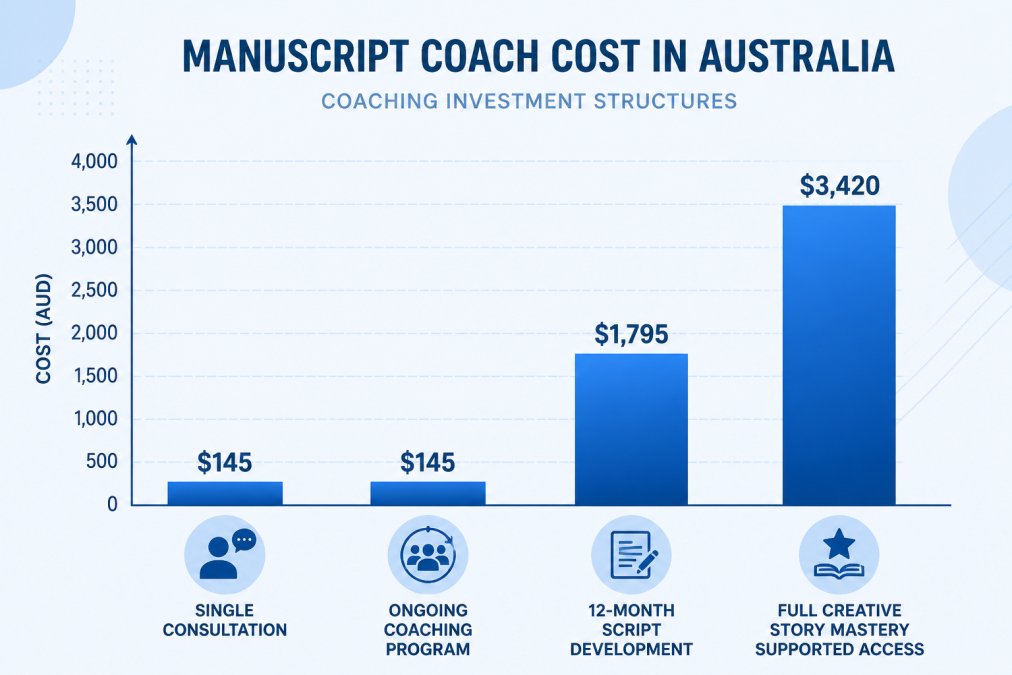
The most expensive option is not always the best fit. A writer with a half-finished manuscript and limited time may get more value from a single consultation that provides clear direction than from a full program they cannot complete. Be honest about your schedule and commitment level before you spend.
Red Flags and Vetting Checklist
Doing your due diligence before hiring a coach protects both your money and your creative confidence. The coaching space has no formal accreditation body, so you must vet candidates yourself.
- Ask for published work or client testimonials you can verify
- Request a sample of the coach's feedback style before paying
- Clarify exactly what is included in the fee: session length, written feedback, email support
- Confirm the coach has experience in your genre, whether fiction, non-fiction, or memoir
- Watch for coaches who promise publication or specific sales outcomes, no one can guarantee that
- Avoid anyone who pressures you into a long, expensive contract after a single conversation
- Check whether the coach is affiliated with a vanity publisher, which signals a conflict of interest
Regional considerations matter less than they once did, since most coaching happens over video call. That said, if you prefer in-person sessions, confirm the coach operates in your city before you invest time in conversations. Remote coaching opens up far more options, so do not limit yourself to coaches in your immediate area unless in-person connection is essential to how you work.
Your Roadmap After Coaching
Finishing your coaching program is the beginning of the next phase, not the end of the road. You should leave the relationship with a polished manuscript and a clear plan for what happens next.
Your first step is a professional edit. A structural edit and copyedit will catch issues your coach may have missed and bring your manuscript to a professional standard. Next, decide your publishing path. If you are pursuing traditional publishing, research literary agents who represent your genre and prepare a book proposal or query letter. If self-publishing suits your goals, plan your cover design, formatting, and distribution strategy.
A manuscript coach helps you master the writing process, but the publishing journey requires its own skills. Give yourself time to learn the landscape, seek feedback from beta readers, and revise with fresh eyes before you submit your work anywhere.
The writing journey does not end when the manuscript is complete. Many writers find that ongoing creative writing coaching programs keep their skills sharp between projects. Whether you are planning your next book or helping other writers in a group setting, the craft you have built will serve you for the rest of your creative life.
Finding the right manuscript coach in Australia comes down to knowing what you need, vetting candidates carefully, and choosing a mentor whose experience matches your goals. The search takes time, but the right partnership will carry your manuscript from a drawer full of drafts to a finished work you are proud to share. At writeinspire, we have spent decades helping writers master the storytelling process through structured coaching and manuscript development. Get started with writeinspire and take your story from spark to finished manuscript.
Frequently Asked Questions
How do I know if I'm ready for manuscript coaching?
You are ready when you have a story that needs structure rather than just an idea. Coaches work best with writers who have a draft, a detailed outline, or at least a clear vision of the full arc. If you are still exploring themes, a short course might be a better starting point. The right coach will meet you where you are, whether that means shaping a rough draft or pushing a polished one toward publishing-ready.
What is the difference between a manuscript coach and an editor?
An editor focuses on the text itself, whether that means developmental editing, copyediting, or proofreading. A manuscript coach works on you as a writer: they guide your process, hold you accountable to writing goals, and teach you the craft skills to finish and improve your book. Many coaches provide feedback similar to a developmental editor, but their core aim is building your ability to write well, not just fixing the current draft.
How do I verify the experience of a manuscript coach?
Ask for examples of published work they have guided, whether traditionally published or self-published. Check whether they have formal credentials in creative writing or a track record in the publishing industry. A coach with 30 years of experience across script development and manuscript coaching, for instance, brings practical insight that academic study alone cannot provide. Request a sample session or consultation to see if their communication style suits your needs.
Do I need a manuscript coach to get published?
No, but coaching significantly improves your odds. Publishing houses and literary agents reject most submissions because the manuscript is not publishing-ready. A coach helps you refine story structure, strengthen your writing craft, and prepare a professional submission package. For self-publishing, the same guidance ensures your book stands out. You can publish without one, but a good coach shortens the gap between a promising draft and a polished manuscript.