

Table of Contents
- Why a Writing Mentor Matters for Your Craft
- Where to Find a Writing Mentor
- How to Approach a Mentor for Writing
- Setting Writing Mentor Expectations
- Creating a Writing Mentor Agreement Template
- Qualities of a Good Writing Mentor
- How to Be a Good Mentee
- Red Flags to Watch For
Why a Writing Mentor Matters for Your Craft
A writing mentor transforms how you develop as a storyteller. They help you understand the principles behind good writing, show you where your instincts are leading you astray, and push you toward standards you didn't know you could reach.
Without feedback, writers often repeat the same mistakes across multiple drafts, mistaking familiarity with quality. A mentor catches these patterns early and saves you years of trial and error by sharing what actually works in publishing (peer-reviewed research). They address root causes, structure problems, pacing issues, unclear character motivation, not just surface-level grammar. They help you understand why a scene isn't working, which is far more valuable than being told it doesn't work.
Where to Find a Writing Mentor
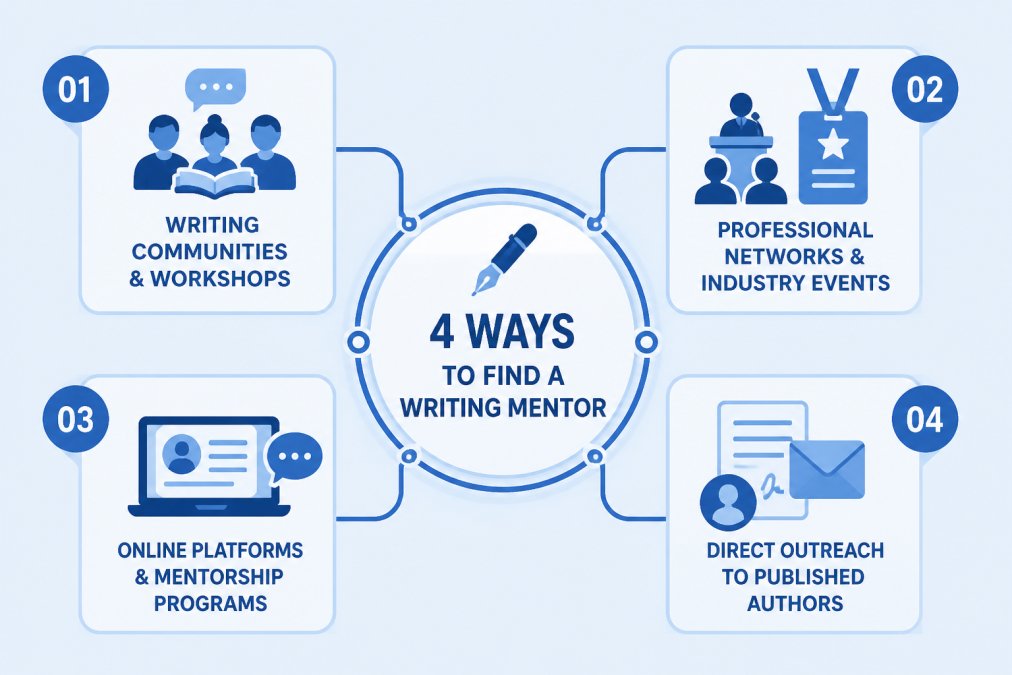
Finding the right mentor means knowing where writers gather and how to approach them. The most effective mentors aren't always advertising their services; they're embedded in communities where serious writers work.
Writing communities and workshops
Writing groups and workshops create natural mentorship opportunities. Local writing circles, university extension courses, and community creative writing programs attract experienced writers who've published work and understand the craft deeply.
Mentors often emerge naturally from these groups, someone whose feedback consistently helps, whose instincts you trust. Look for workshops focused on your genre. A mentor who specializes in fiction might not be the right fit if you're writing creative nonfiction or plays.
Professional networks and industry events
Publishing industry events, writing conferences, and professional organisations create formal spaces where mentorship happens. Conferences often include mentorship sessions or manuscript consultations. Industry events let you build relationships over time, and a casual conversation might lead to ongoing mentorship.
Professional writing organisations often maintain mentor directories or facilitate introductions between emerging writers and experienced ones.
Online platforms and mentorship programs
Online communities and structured mentorship platforms have expanded access dramatically. Platforms dedicated to creative writing connect mentors and mentees across geography, making it possible to work with someone whose work you admire even if they're not local.
Structured programs come with built-in frameworks, defined meeting schedules, and clear expectations. The trade-off is that you lose the community element. For writers who need focused, intensive feedback on a specific project, Writing Coaching or Writing Consultation Creative Support can be ideal, offering one-on-one guidance tailored to your manuscript and goals.

How to Approach a Mentor for Writing
Approaching a potential mentor requires genuine preparation. A vague request for guidance wastes their time and signals that you haven't thought seriously about what you need.
Research before you reach out
Before contacting anyone, understand their work and focus. Read their published writing and follow their online presence if they maintain one. This helps you determine if they're actually a good fit. A mentor who writes experimental poetry might not guide your historical fiction well.
Look for signals about whether they mentor at all. Check if they've published work you genuinely admire. If their work doesn't move you, the mentorship won't either.
Crafting your initial message
Your first message should be brief, specific, and show that you've done the research. Lead with what you admire about their work, then state clearly what you're looking for: feedback on a specific manuscript, guidance on a particular craft problem, or ongoing mentorship.
Include a sentence or two about your writing, what you're working on, and what specific challenge brought you to them. Be direct about what you're proposing. Are you asking for a one-time consultation? Ongoing monthly meetings? The clearer you are, the easier it is for them to say yes or no.
Setting Writing Mentor Expectations
Clear expectations prevent misunderstandings and protect both mentor and mentee. The best mentorships have explicit agreements about what happens next.
What mentors should and shouldn't charge for
A mentor should charge for actual mentoring, time spent reviewing your manuscript, discussing your writing craft, helping you develop your story, or providing editorial feedback. That's skilled work that deserves compensation.
A mentor should not be charging a fee for every discussion, where other topics are discussed, for instance, personal weekend pursuits. Personal chats about weekend plans, casual writing advice over coffee, or a quick phone call to brainstorm aren't mentoring sessions. These informal moments build the relationship and trust that makes formal mentoring work. The mentor should only charge a fee when actually mentoring the mentee with creative writing. Outside of this, the mentor should be building a trusting relationship where a bond is created built of trust and integrity.
Some mentors work on sliding scales based on what mentees can afford. Others charge flat rates. Some offer a mix, free initial consultation, then fees for ongoing work. The key is clarity about what's paid and what's not.
Frequency and format of meetings
Agree on how often you'll meet and what format works. Monthly deep-dive sessions on your manuscript differ vastly from weekly check-ins or quarterly reviews.
Consider what you actually need. If you're stuck on a structural problem, you might need intensive feedback on a full manuscript in one detailed session. If you're working through a long manuscript chapter by chapter, regular monthly meetings make sense.
Format matters too. Some mentorship happens via email with written feedback; some is phone or video calls where you discuss your work in real time. Discuss turnaround times so you can plan your writing schedule around their availability.
Creating a Writing Mentor Agreement Template
A written agreement doesn't need to be formal or legal. It's simply a document that clarifies what both of you are committing to.
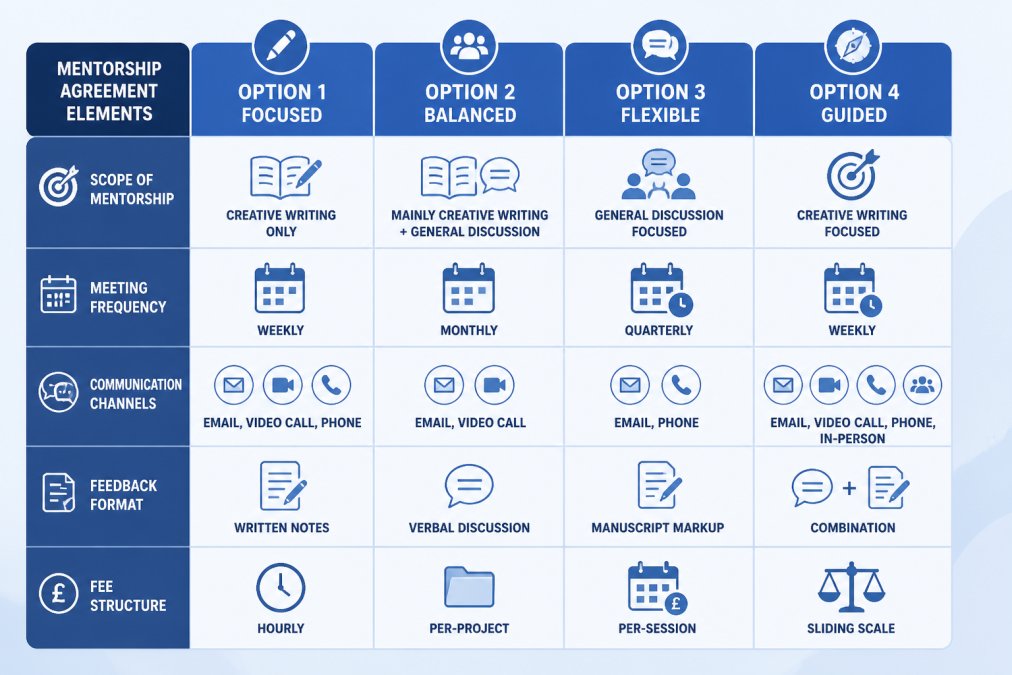
A basic agreement should include:
Scope of mentorship. What will you work on together? Is it strictly creative writing feedback, or does it include career advice and publishing strategy? Clarify what's in scope and what's not.
Duration and commitment. How long is this mentorship? Six months? A year? Ongoing until your manuscript is finished?
Meeting schedule and format. How often do you meet? For how long? Via email, video call, phone, or in person? What's the turnaround time for feedback?
Confidentiality and feedback style. How will the mentor give feedback? Detailed written notes? Verbal discussion? How direct should criticism be?
Fees and payment. What's the cost, if any? When is payment due?
Intellectual property. Your work belongs to you. The mentor is providing guidance, not claiming ownership or rights.
Cancellation and flexibility. What happens if life gets in the way? Can either party pause the mentorship?
A simple email or shared document outlining these points works. The point isn't legal protection; it's clarity.
Qualities of a Good Writing Mentor
Not every experienced writer makes a good mentor. The best mentors have specific qualities that go beyond knowing how to write well.
A good mentor listens more than they talk and asks questions about your intentions before offering solutions. They understand that your voice and vision matter, and they're helping you strengthen what you're trying to do, not redirecting you toward their own aesthetic.
They have strong editorial instincts and can identify real problems in your work, not just surface-level issues (mla.org). They understand structure, character development, pacing, and dialogue at a level that lets them diagnose what's actually wrong.
They're invested in your growth, not in proving how much they know. They understand the publishing industry and can help you navigate realities without crushing your creative ambitions (publishers.org). They're honest without being cruel, and they have published work themselves.
How to Be a Good Mentee
Mentorship works both ways. Being a good mentee means showing up prepared, taking feedback seriously, and respecting your mentor's time.
Come to meetings with specific questions or specific sections of work. Implement feedback before your next meeting. Be honest about where you're struggling. Respect their time by meeting deadlines and sending materials in advance.
Ask clarifying questions if feedback doesn't make sense. Develop your own critical eye alongside their feedback. Over time, you should be able to spot problems yourself.
Red Flags to Watch For
Some relationships that look like mentorship aren't actually serving your development.
A mentor who's primarily interested in your money is a red flag. If every conversation ends with an upsell to another service, they're selling, not mentoring.
Someone who demands exclusivity or isolation is dangerous. A good mentor encourages you to learn from multiple sources and develop your own critical judgment.
A mentor who dismisses your creative vision or constantly redirects you toward their own aesthetic isn't serving your growth. Watch for mentors who take credit for your work or claim ownership of your ideas. Your manuscript is yours.
Someone who's unavailable or constantly cancels isn't committed. A mentor who only offers praise without constructive feedback isn't actually helping. Be cautious of mentors who pressure you into decisions about publishing, agents, or career moves.
Finding a writing mentor is one of the most valuable investments you can make in your craft. The right mentor accelerates your development, helps you finish what you start, and connects you to the professional standards that matter in publishing. Whether you're working through your first draft or polishing a manuscript that's been sitting unfinished, mentorship creates the accountability and expertise that helps you produce work you're genuinely proud of.
Frequently Asked Questions
How much does a writing mentor typically cost?
Costs vary widely depending on the mentor's experience and the format of mentorship. Some mentors offer informal guidance within a community at no cost, whilst others charge for structured sessions. The key is that a mentor should only charge a fee when actively mentoring you on creative writing craft. Casual conversations about personal pursuits or general advice shouldn't incur charges, those should build trust and integrity in your relationship. When fees are involved, they should be clearly outlined in a mentorship agreement before you begin.
What's the difference between a writing coach and a writing mentor?
A writing mentor typically offers ongoing, relational guidance focused on your long-term creative development and career growth. They share their experience and help you navigate the publishing industry and refine your literary vision. A writing coach often works on specific, time-bound goals, like completing a manuscript draft or mastering a particular technique. Many mentors take on coaching responsibilities, but mentorship is broader and more about building a sustained professional relationship grounded in trust.
How do I know if a writing mentorship is a good fit?
A good fit means your mentor understands your writing goals, works in a genre or form you're pursuing, and communicates in a way that resonates with you. Red flags include mentors who promise quick fixes, demand excessive fees for every conversation, or lack published work or credible experience. Trust your instinct after your first meeting. A strong mentorship should feel supportive, challenging, and honest, not pressured or dismissive of your concerns.
Are there formal writing mentorship programs available?
Yes, many writing mentorship programs offer structured support for developing writers. These range from community-based workshops to one-on-one coaching arrangements with experienced authors and publishing professionals. Some programs are part of writing organisations or literary retreats, whilst others operate independently. Look for programs that emphasise manuscript assessment, constructive feedback on your work, and ongoing professional development rather than vanity publishing services.
This article was written using GrandRanker