

Table of Contents
- Start With Your Writing Goals and Genre
- What to Look for in a Fiction Writing Mentor
- Writing Mentor Questions to Ask Before You Commit
- How to Approach a Writing Mentor
- Writing Mentorship Expectations: What It Can and Cannot Do
- Writing Mentor vs Editor: Which Do You Need?
- Red Flags, Costs and Safeguarding in Mentoring
- Conclusion
- Frequently Asked Questions
Last Updated: October 4, 2026
Start With Your Writing Goals and Genre
The best fiction writing mentor matches where you are now and where you want to go, not the most famous name.
Most writers skip this step, hunt for someone impressive, then wonder why it fizzles out.
At writeinspire, we've spent over 30 years working with storytellers at every stage.
So before you search for anyone, answer two questions.
Clarify What You Want From Mentorship
Mentorship means different things to different people. Get specific about what you actually need.
Ask yourself:
- Do you need someone to read your full manuscript and tell you what's broken?
- Do you need help finishing a draft you keep abandoning?
- Do you need someone to push you on craft, not just cheer you on?
Write your answers down. A mentor brilliant at structural feedback might be useless at accountability.
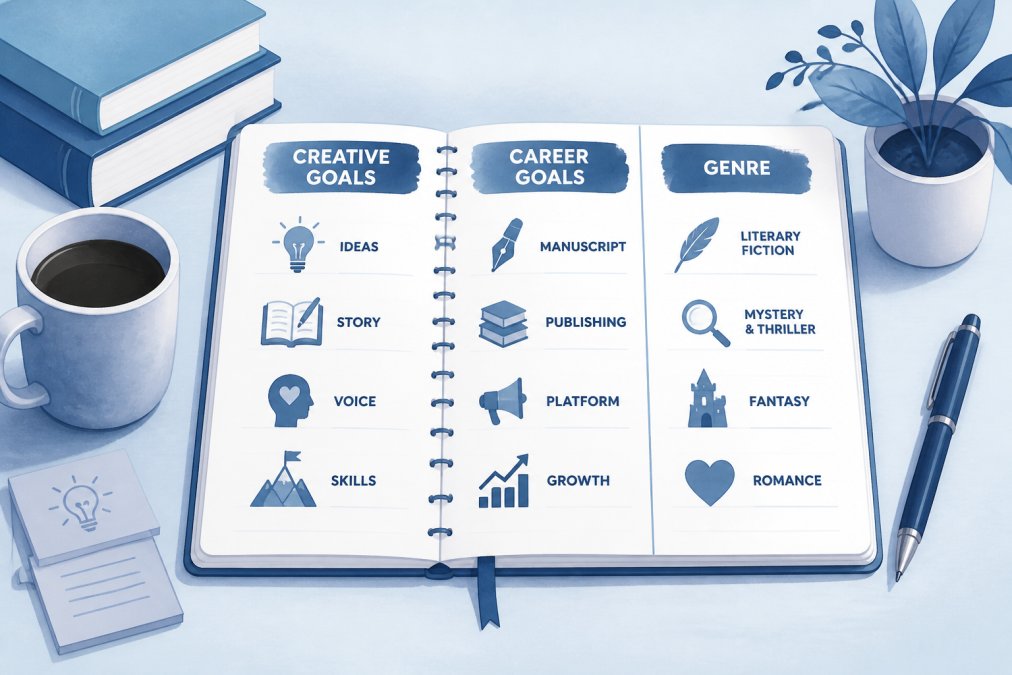
Identify Your Genre and Career Goals
Genre matters more than most writers realise. A literary fiction mentor may not understand a thriller's pacing, and a fantasy mentor may not grasp historical fiction's research load.
Think about your writing goals in two layers:
- Creative goals: finish the manuscript, master dialogue, write a publishable draft
- Career goals: traditional publishing, self-publishing, building a readership
Both layers shape who you approach. A mentor with deep genre experience spots problems a generalist misses.
What to Look for in a Fiction Writing Mentor
A good fiction writing mentor has three things: proven craft, relevant genre experience, and a teaching instinct.
Publishing credits alone don't make someone a good mentor. Some excellent authors are terrible teachers, and some writers with modest records are extraordinary at developing others' work.
Match the Mentor to Your Genre, Form and Stage
Generic mentoring advice treats all writers the same, but fiction doesn't work that way. A mentor brilliant with literary short stories may have no feel for a thriller's pacing, speculative fiction's world-building, or romance's emotional interiority.
Ask three matching questions before you go further:
- Genre: Have they written, edited, or taught in your genre or one closely adjacent to it? Adjacent matters. A crime writer can often help a thriller writer; a poet usually cannot.
- Form: Do they work in your form, novel, novella, short story collection, series, graphic narrative, middle grade, young adult? A mentor who only writes standalone literary novels may not grasp a series' arc demands or middle grade's word-count discipline.
- Stage: Where is your manuscript? A mentor who excels at early structural work, premise, character, stakes, differs from one who thrives on line-level prose in a near-final draft. Ask which stage they prefer.
Read Their Work Like a Writer
Before you commit, read something they've written. Not to judge whether you like it, but to study how they handle the things you struggle with. Do they write dialogue you envy?
If their writing makes you think "I want to learn how they do that", that's a strong signal. If it leaves you cold, no teaching experience will fix the mismatch.
Look for Evidence They Can Teach, Not Just Write
Teaching is a separate skill from writing. Look for signs a mentor can explain craft, not just demonstrate it:
- Workshop, tutoring, or mentoring experience, formal or informal
- Feedback samples, testimonials, or writers willing to speak about working with them
- A clear process for how they read, respond, and follow up
Evaluating Fit and Compatibility
Fit is about how you work together, not just credentials. Some writers need gentle encouragement; others want direct feedback. The wrong match wastes months.
Questions to ask yourself:
- Does their communication style suit you?
- Do they listen, or do they lecture?
- Can they explain why something isn't working, not just that it isn't?
A mentor relationship built on mutual respect outlasts one built on credentials alone.
How to Judge the Quality of Their Feedback
Feedback quality is the single best predictor of whether mentoring will help you.
Strong feedback tends to be:
- Specific: it points to a line, a scene, a pattern, not a general impression
- Constructive: it names what isn't working and suggests a direction, without dictating the fix
- Actionable: you can leave the session knowing what to try next
Weak feedback is vague, contradictory, or focused on the mentor's preferences rather than your manuscript's needs. If you can't tell what to do next after a session, that's a signal.
Writing Mentor Questions to Ask Before You Commit
Before you commit, ask these writing mentor questions. The answers tell you more than any bio page.
About their approach:
- How do you give feedback on a manuscript?
- What does a typical session look like?
- How do you handle disagreements about creative choices?
About logistics:
- How often do we meet, and for how long?
- What's the scope of what you'll read?
- What are your expectations of me between sessions?
About outcomes:
- What does success look like at the end of our time together?
- Can you share examples of writers you've worked with?
Listen carefully to how they answer. Vagueness about scope or expectations is a warning sign.
How to Approach a Writing Mentor
Reaching out feels daunting, but mentors are writers too, and most remember asking for help themselves.
A simple approach works best:
Writer Coaching & Guided Resources →
- Read their work first. Mention a specific piece you admired. Be genuine.
- Introduce yourself briefly. Who you are, what you write, where you are in your project.
- State what you're looking for. Be specific about the kind of guidance you need.
- Ask a clear question. "Would you be open to a short conversation about mentoring?" beats a vague "Can you help me?"
- Respect their time. Keep it short. Offer to work around their schedule.
If they say no, thank them and move on. A no isn't a judgment on your writing.
Writing Mentorship Expectations: What It Can and Cannot Do
Writing mentorship expectations need to be realistic from day one. A mentor accelerates your growth. They don't write the book for you.
What mentoring can do:
- Give you honest, structured feedback on your manuscript
- Help you build a sustainable writing practice
- Hold you accountable to daily goals or weekly goals
What mentoring cannot do:
- Guarantee publication
- Replace your own hours at the desk
- Fix a project that needs a full rewrite you're unwilling to do
The writers who get the most from mentoring are the ones who do the work between sessions.
Set the Scope in Writing Before You Start
Vague arrangements are where most mentoring relationships go wrong. Before you begin, agree on the practical shape of the work in writing. A simple one-page summary is enough. It should cover:
- Sessions: how often you meet, how long each session runs, and whether they're online, by phone, or in person
- Reading: how many pages or words the mentor will read between sessions, and how far ahead you need to send them
- Turnaround: how long feedback takes, and what happens if either of you needs to reschedule
If a mentor is reluctant to put any of this in writing, treat it as a warning sign rather than a personality quirk.
Understand What Feedback Will Look Like
Expectations about feedback matter as much as outcomes. Ask upfront:
- Will feedback be written, verbal, or both?
- Will it focus on structure, character, prose, or all three?
- Will the mentor mark up your manuscript directly, or summarise in notes?
A good mentor will welcome these questions. A mentor who deflects them is telling you something.
Know the Difference Between Mentoring and Other Support
Mentoring sits alongside, not instead of, other kinds of help. An editor improves your manuscript, a coach builds momentum, a critique partner offers peer feedback, and a mentor develops you as a writer over time.
Many writers need more than one of these at different stages. Knowing which you need right now stops you paying for the wrong kind of support.
Red Flags and Safeguarding
Most mentoring relationships are healthy and productive. A few aren't. Knowing the warning signs protects your time, your money, and your work.
Watch for:
- Pressure to pay large sums upfront with no clear scope
- Promises of publication or bestseller status in exchange for payment
- Reluctance to explain their process, credentials, or past work
On mentoring costs, ask directly what's included before you pay.
If you're working online, keep records of your sessions and agreements. Trust your instincts, if something feels off, it probably is. You're allowed to end a mentoring relationship that isn't working.
Writing Mentor vs Editor: Which Do You Need?
A writing mentor vs editor comparison comes down to this: an editor improves your manuscript. A mentor improves you.
| Role | Primary Focus | Works On | Best For |
|---|---|---|---|
| Writing mentor | Your development as a writer | Craft, process, accountability, career | Long-term growth and skill building |
| Editor | The manuscript itself | Structure, line editing, copywriting, proofreading | A finished draft ready for polish |
| Writing coach | Momentum and habits | Goals, deadlines, confidence | Writers who struggle to finish |
| Critique partner | Peer feedback | Early drafts, plot holes, pacing | Ongoing, low-cost feedback |
Many writers need more than one. A mentor helps you grow. An editor polishes the result.
Red Flags, Costs and Safeguarding in Mentoring
Most mentoring relationships are healthy and productive. A few aren't. Knowing the warning signs protects your time and money.
Watch for:
- Pressure to pay large sums upfront with no clear scope
- Promises of publication in exchange for payment
- Reluctance to explain their process or credentials
On mentoring costs, ask directly what's included before you pay.
If you're working with someone online, keep records of your sessions. Trust your instincts.
At writeinspire, our Writer Coaching & Guided Resources are built around clear scope and real work.

Conclusion
Finding the right fiction writing mentor takes honesty about your goals, careful evaluation of fit, and clear questions before you commit.
If you want structured support from people who've spent decades developing writers, writeinspire offers Writing Consultation Creative Support and our full Creative Story Mastery program.

Get started with writeinspire and turn your half-finished draft into something you're proud to share.
Frequently Asked Questions
What should I look for in a fiction writing mentor?
Look for someone with published work or proven experience in your genre, whether that is literary fiction, fantasy, or historical fiction. They should understand your writing goals and offer constructive feedback on your manuscript. Check they have relevant experience guiding writers through the full writing process, not just editing. A good mentor relationship also depends on fit: you need to feel comfortable sharing early drafts and asking questions. Ask about their writing practice and whether they can support your creative goals over time.
What questions should I ask a potential writing mentor?
Ask about their genre experience, how they structure feedback, and how often you would meet. Find out whether they have helped writers complete a book project before. Ask what they expect from you between sessions, such as daily goals or weekly goals, and how they handle disagreements about your manuscript. It also helps to ask how they measure progress and what happens if the mentor relationship is not working. These writing mentor questions reveal whether their approach suits your writing process.
What is the difference between a writing mentor and an editor?
An editor focuses on improving a finished or near-finished manuscript, often with a final edit or copywriting pass. A mentor works with you across the writing process, helping you develop writing skills, stay accountable, and shape your book project from early drafts. The mentor vs editor choice depends on your stage: if you need structural guidance and accountability, choose a mentor. If your manuscript only needs polishing, an editor may be enough. Many writers use both at different stages.
How can I make the most of a writing mentorship?
Come prepared with clear writing goals and a writing journal to track progress. Share your manuscript honestly, ask questions when feedback is unclear, and apply what you learn to your writing practice. Meet regularly, whether weekly or monthly, and treat deadlines as part of your professional development. If you are working on a book project, keep a running list of scenes or chapters you want feedback on. The more specific you are, the more useful the mentoring becomes.